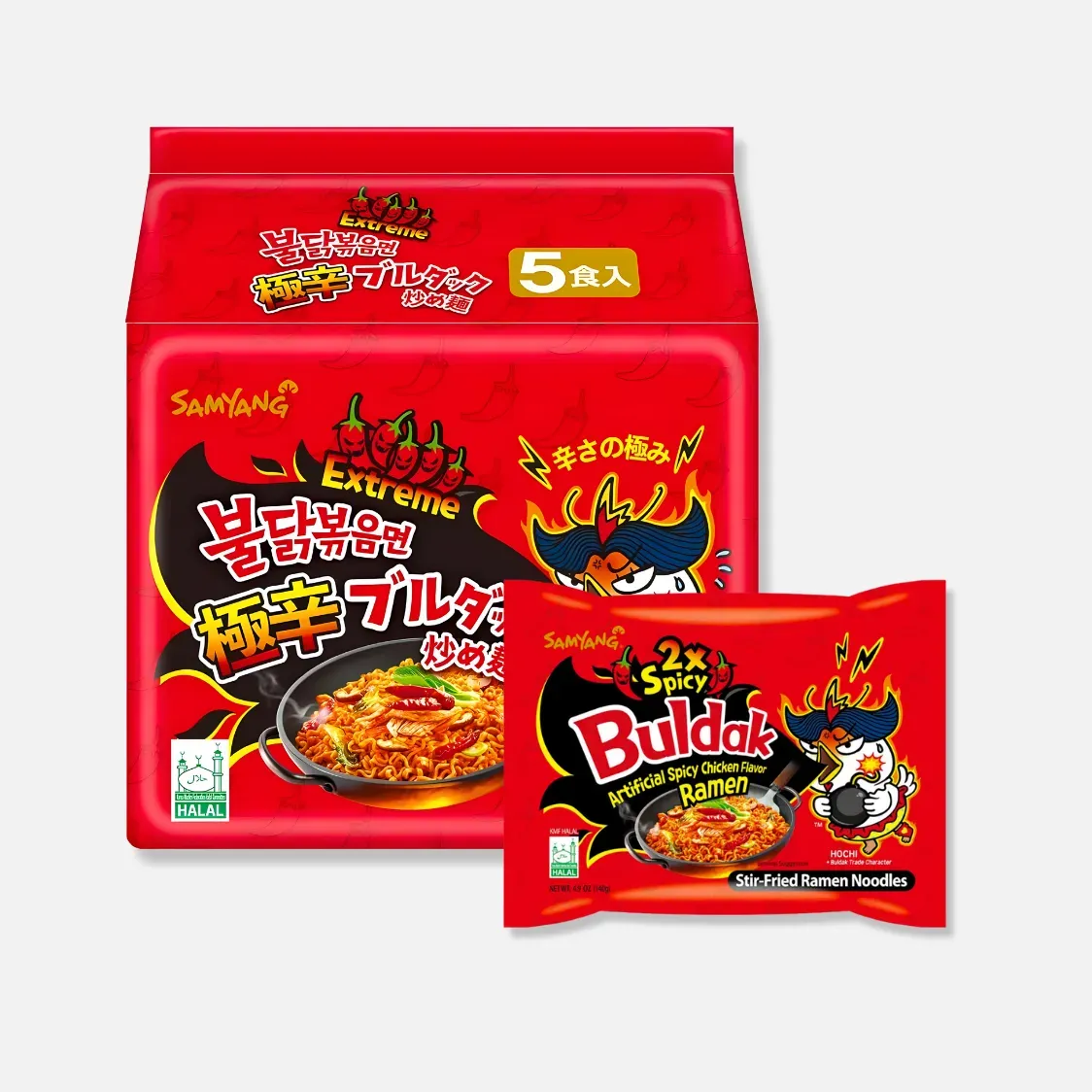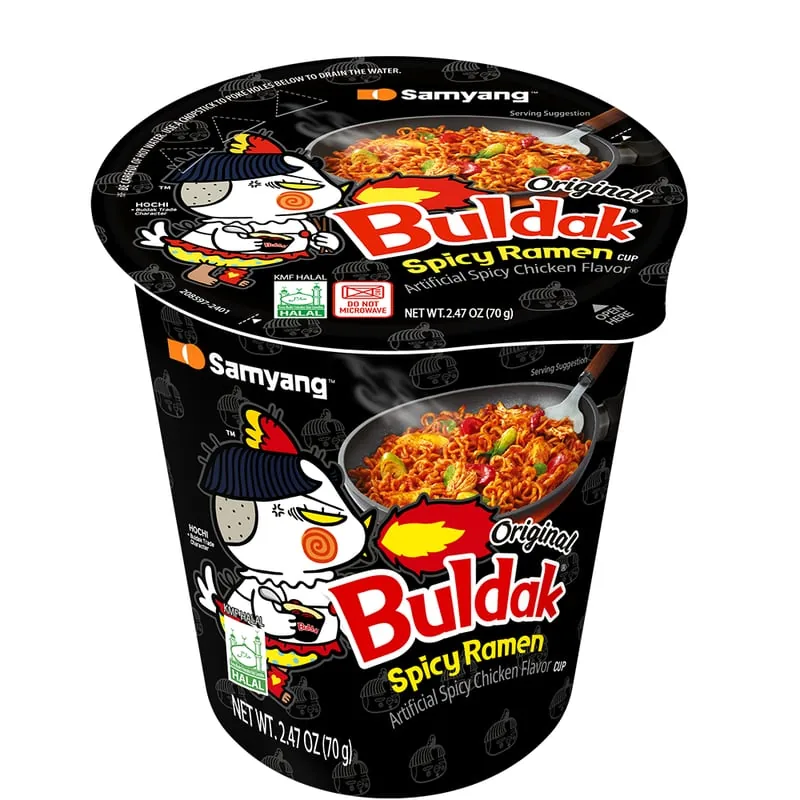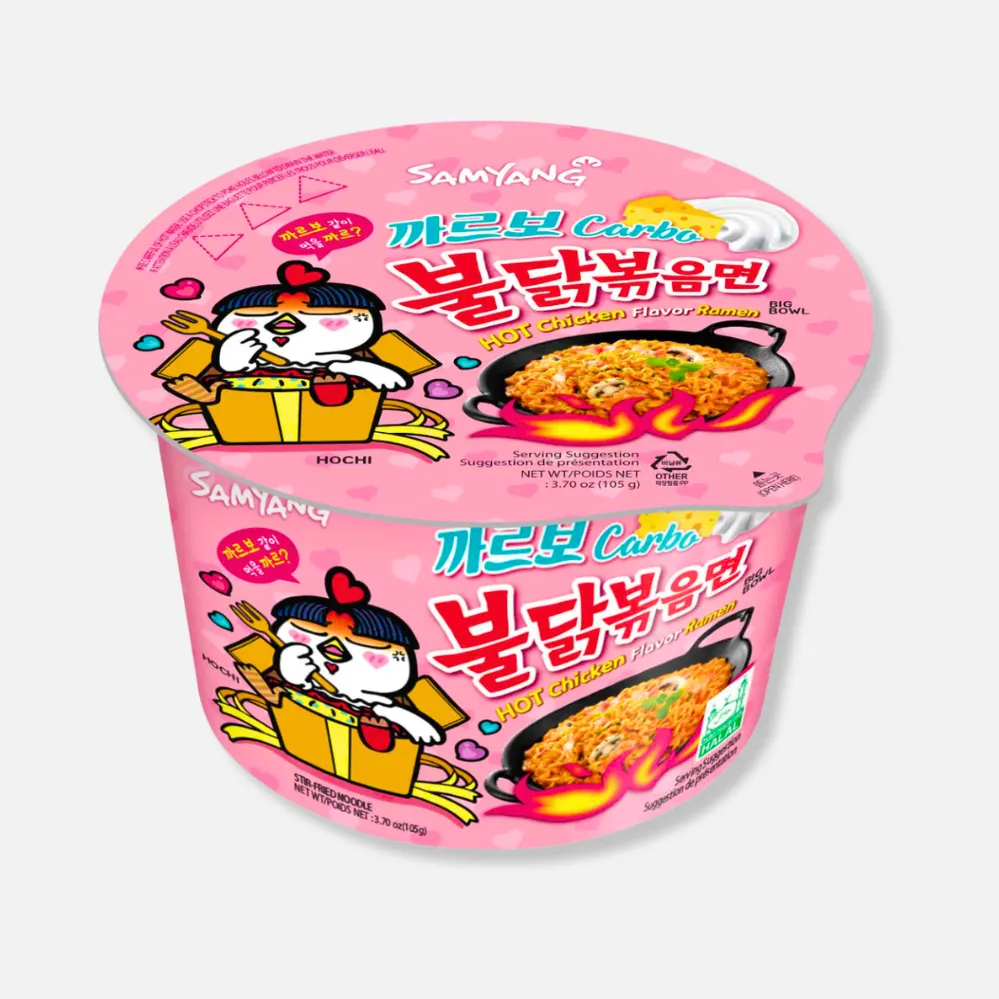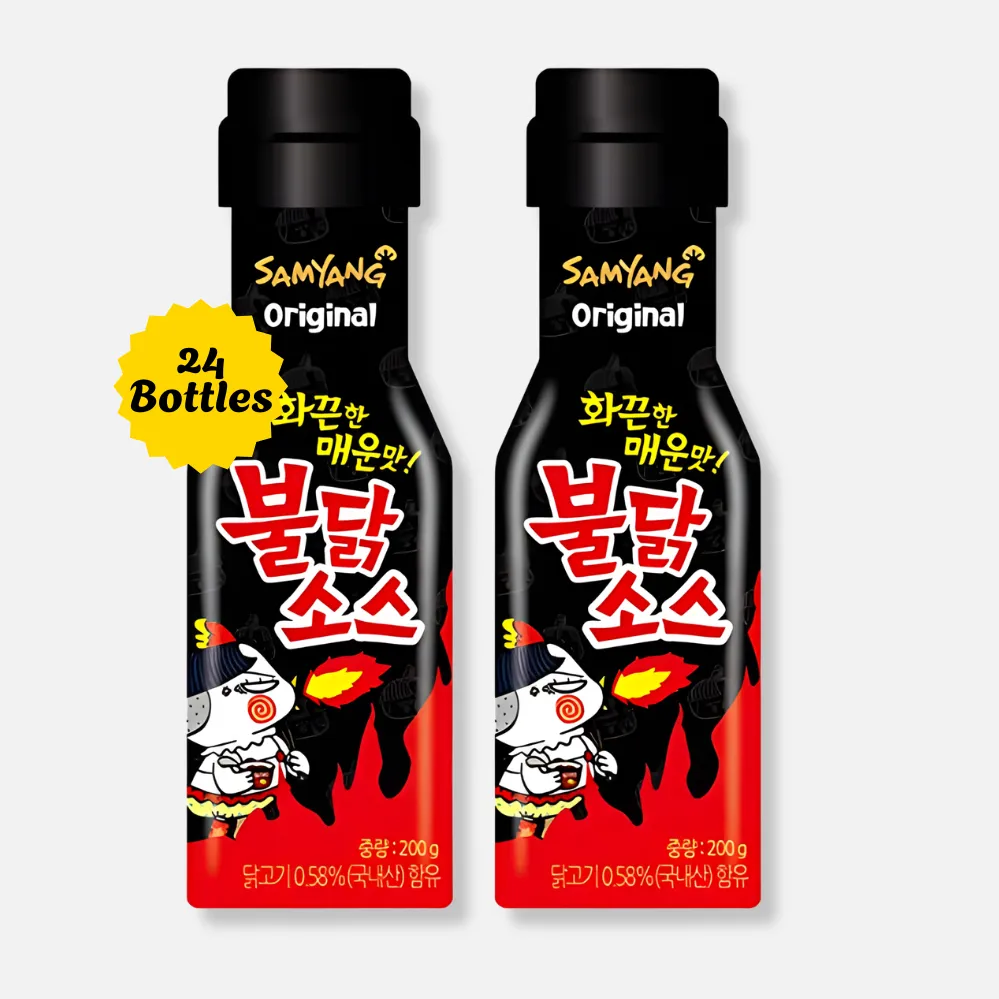
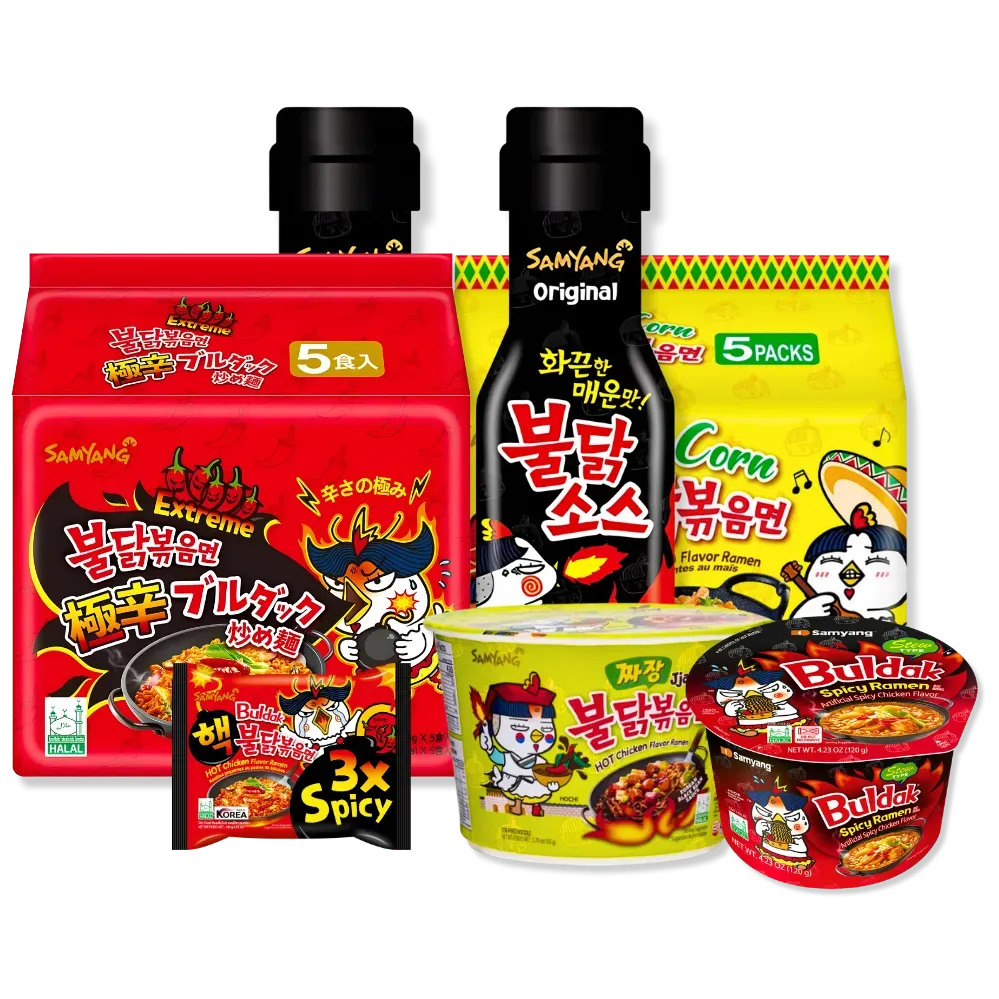
On the lines we have verified, a carton of Samyang Buldak packet ramen holds 40 packs, cup noodles 30, bowls 16 and hot sauce 24 bottles. Those are the configurations across 55 of the 56 products we supply.
One qualification matters before you build a quantity from those numbers: carton quantity is a property of the individual SKU, not of the format. A manufacturer can supply the same flavour in a different case configuration between production runs or between markets. The figures below are what our catalogue records for each line, and the product page for any given item is the authoritative one.
Carton quantities at a glance
| Format | Units per carton | Verified across | Unit weight | Net content per carton |
|---|---|---|---|---|
| Packet ramen | 40 packs | 20 lines | 130–145g | 5.2–5.8 kg |
| Cup noodles | 30 cups | 20 lines | 65–80g | 1.95–2.4 kg |
| Bowl noodles | 16 bowls | 12 lines | 105–179g | 1.68–2.86 kg |
| Hot sauce | 24 bottles | 3 lines | 200g | 4.8 kg |
Weights vary within a format because flavours differ — a 130g carbonara packet and a 145g stew-type packet are both 40 to a carton. Where two lines share a format, the carton count is usually the same and the net weight moves with the flavour.
One packet line is not included in the table above. Its packing record in our catalogue is ambiguous, and we would rather leave it out than publish a figure we cannot stand behind. If you need that specific line, ask us and we will confirm the configuration for you.
Packet ramen: 40 packs per carton
The packet format is the volume product, and it is the one most buyers start with. Across the twenty packet lines where our catalogue records a confirmed configuration, cartons hold 40 packs.
A packet is a single sealed portion of noodles with its sauce sachet. Inside the carton these are grouped into retail multipacks, which is how they reach the shelf in most grocery formats — the shopper buys the multipack, not the individual packet. That grouping is also why case descriptions for this format can read ambiguously: the same document may use “pack” for the multipack and for the portion inside it.
Forty portions to a carton is what makes this the lowest cost per portion of anything we supply: whatever the carton is quoted at, it divides across more servings than any other format does. That is why packet ramen dominates first orders. Pricing is quoted per carton against your order — ask us for the flavours you want.
Cup noodles: 30 cups per carton
Cup noodles are packed 30 to a carton across all twenty lines. Each cup is a sealed retail unit with its own barcode, so the carton goes straight to shelf without repacking.
Cups run 65g, 70g or 80g depending on the flavour. The carton is physically bulkier than a packet carton for less net product — 1.95 to 2.4 kg against 5.2 to 5.8 kg — because you are shipping the container as well as the noodles. That is the trade-off the format exists to make.
Thirty sealed units to a carton puts a cup between the two noodle extremes on cost per portion: above a packet portion, below a bowl. The carton price itself is quoted on enquiry.
Bowl noodles: 16 bowls per carton
Bowls are the largest single-serve format and the smallest carton count at 16, consistent across all twelve lines. They range from 105g up to 179g for the tteokbokki bowl.
Sixteen is low because a bowl is wide and rigid. A bowl carton holds 1.68 to 2.86 kg, and spreading a carton across only sixteen units makes this the highest per-unit cost in the range — which is also the format that supports the highest retail price point, so the two tend to cancel out.
Hot sauce: 24 bottles per carton
The three Buldak hot sauces are all 200g bottles, packed 24 per carton. It is the cheapest carton we sell, and the one most often added to an order for the shelf next to the noodles.
What 200 cartons actually contains
The minimum order is 200 cartons. Because carton counts differ by format, the same 200 cartons means very different unit volumes. The figures below assume the configurations in the table above:
| 200 cartons of… | You receive | Approximate net weight |
|---|---|---|
| Packet ramen at 40/carton | 8,000 packs | 1,040–1,160 kg |
| Cup noodles at 30/carton | 6,000 cups | 390–480 kg |
| Bowls at 16/carton | 3,200 bowls | 336–572 kg |
| Hot sauce at 24/carton | 4,800 bottles | 960 kg |
Eight thousand packets sounds like a lot until you divide it across flavours. Spread evenly over twenty packet lines it is only 400 of each, which is why most first orders concentrate depth on three or four proven flavours rather than taking a little of everything. Our minimum order quantity guide works through how buyers usually structure that.
The minimum applies to the order, not to each line. One order can mix packets, cups, bowls and sauces freely.
Cartons per pallet
For the products where we hold pallet data, noodle cartons palletise at 80 per pallet and sauce cartons at 85. The difference is simply how the two carton shapes stack — it is not a different minimum.
At 80 cartons per pallet, a 200-carton minimum is two and a half pallets. That is a part-container load rather than a full one, which is deliberate: it lets a new buyer trial the category properly without committing to a full container.
How to use these numbers
Four checks before you send a quantity through:
- Confirm the configuration for the exact lines you want. Carton quantity belongs to the SKU. Use the figures on each product page, and we will restate them on the quotation before anything is committed.
- Work backwards from shelf, not forwards from carton. Decide how many facings each flavour needs and how fast you expect it to turn, then convert to cartons. Forty packs per carton means a single carton covers a lot of shelf weeks on a slow line.
- Match format to channel. Packets suit grocery, where the shopper cooks at home. Cups and bowls suit convenience and food-to-go, where they need only hot water. Our format comparison covers the commercial differences in detail.
- Check the weight, not just the count. A 200-carton packet order is over a tonne of product. A 200-carton cup order is under half that. It changes what you need at the receiving end.
All products carry a 10–12 month shelf life from production and are manufactured by Samyang Foods Co., Ltd. in South Korea.
Ready to price an order?
Every product in the full catalogue shows its pack size, units per carton and both per-unit and per-carton pricing, so you can build a quantity before you speak to anyone. When you have a shortlist, send it through with your destination port and we will confirm carton configurations and quote goods and freight together.
Frequently asked questions
- How many packs of Buldak ramen are in a carton?
- On the packet lines we have verified, a carton holds 40 packs. Packs weigh 130g to 145g depending on the flavour, giving roughly 5.2 to 5.8 kg of product per carton. Carton quantity is a property of the individual SKU rather than of the format, so check the product page for the specific line you are ordering.
- How many Buldak cup noodles are in a carton?
- 30 cups per carton across all twenty cup lines we supply. Cups run 65g to 80g each, so a carton holds around 1.95 to 2.4 kg.
- How many Buldak bowls are in a carton?
- 16 bowls per carton across all twelve bowl lines. Bowls are the largest single-serve format at 105g to 179g each.
- How many bottles of Buldak hot sauce are in a carton?
- 24 bottles per carton. All three sauces are 200g bottles, so a carton holds 4.8 kg.
- Is the carton quantity the same for every flavour?
- Not necessarily. Packaging configuration is set per SKU, and a flavour can be supplied in a different case configuration from its siblings. The figures on each product page are the ones that apply to that line, and we confirm carton quantities on every quotation before an order is placed.
- What is the minimum order quantity?
- 200 cartons. The minimum applies to the order as a whole rather than per flavour or per format, so a single order can combine packet ramen, cup noodles, bowls and sauces in any proportion.
- How many cartons fit on a pallet?
- 80 cartons per pallet for the noodle ranges and 85 for the sauce bottles, based on the packing data we hold for those products.