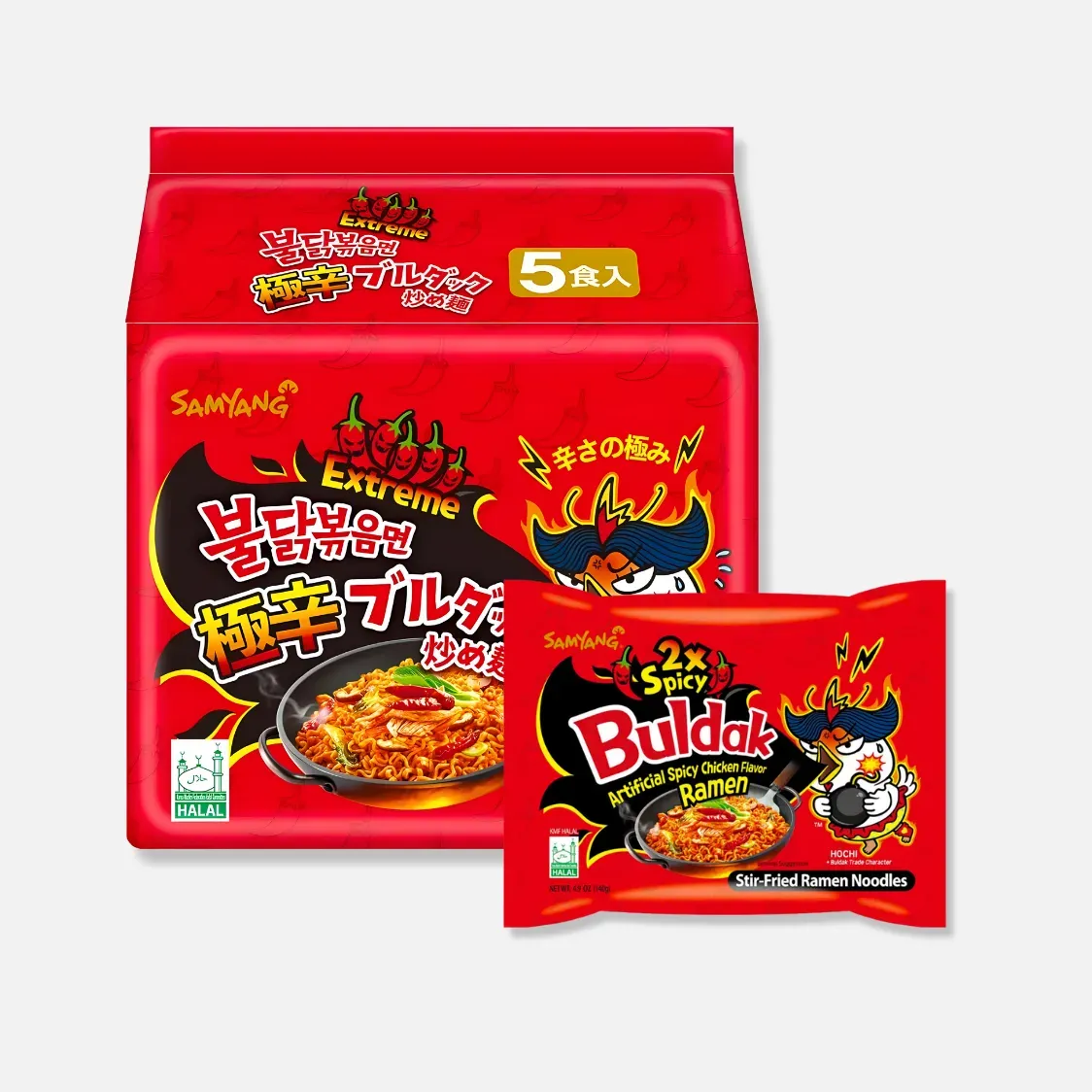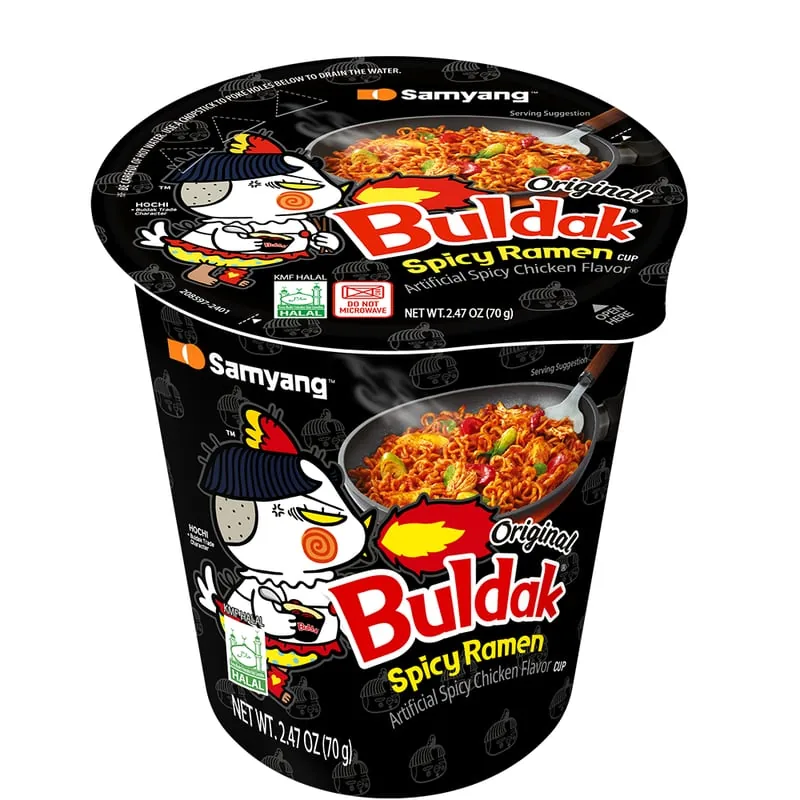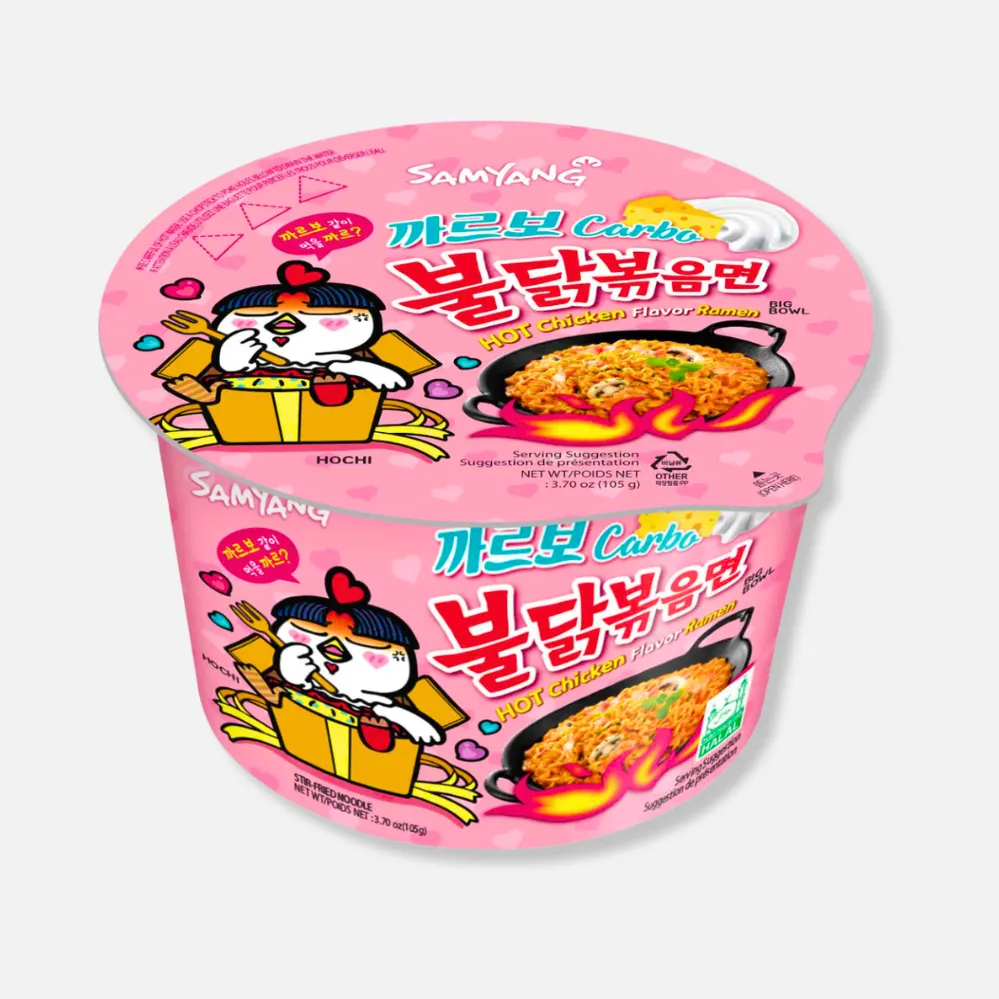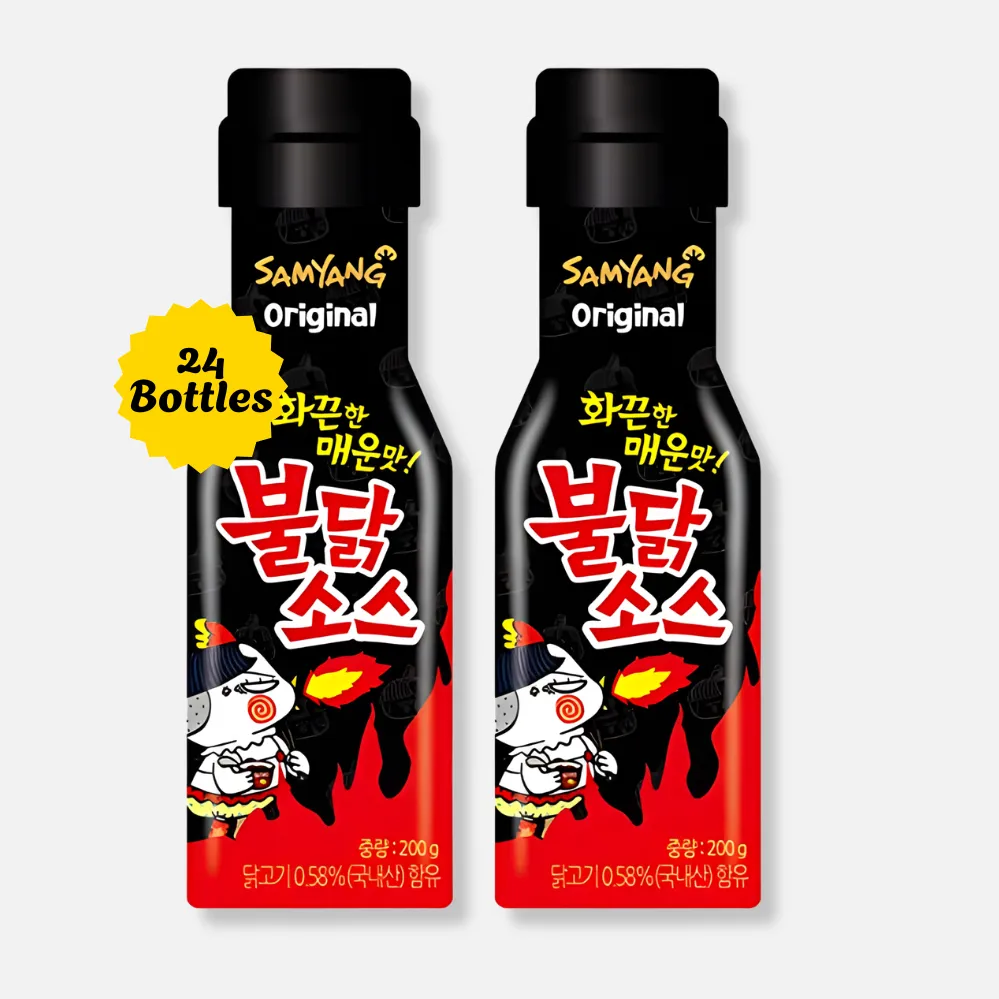
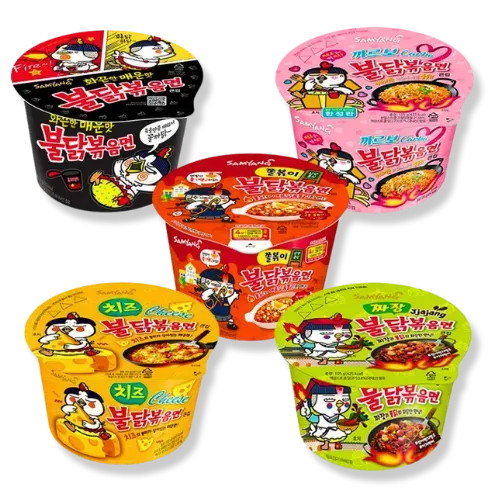
Instant noodles are shelf-stable, but they are not indefinite. The Samyang products we supply carry a 10–12 month shelf life from the production date — a figure that describes the whole life of the product, not the portion of it you receive.
That distinction is the one that matters commercially. A wholesale buyer is purchasing remaining time as much as goods, and a carton with four months already elapsed is a materially different proposition from the same carton at one month, even though nothing about the product has changed.
This guide covers what shelf life means for this category, how date markings differ, what to store stock in, and what to check when it arrives.
What “shelf life” means for instant noodles
Shelf life is the manufacturer’s assessment of how long a product holds its intended quality under the storage conditions they specify. It is set by the producer, not by the distributor, and it assumes the product is kept as instructed.
Instant fried noodles are stable because the noodle block is dried and the moisture content is low, which is why they need no refrigeration. What limits their life is gradual quality change rather than rapid spoilage — fried products lose condition over time, and flavour sachets and dried garnishes have their own characteristics.
The hot sauces in the range are a different product in a different container, so treat their date markings on their own terms rather than assuming they behave like the noodles.
Manufacture date, best before, and use by
Three markings get conflated. They are not the same thing.
| Marking | What it tells you |
|---|---|
| Manufacture / production date | When the product was made. Shelf life is counted from here. |
| Best before | A quality indicator — the period the manufacturer expects the product to stay at its intended standard. |
| Use by / expiry | A safety-related marking, applied to highly perishable foods in most regulatory systems. |
Two cautions matter here.
Terminology and legal meaning differ by market. What counts as a best-before date, how it must be formatted, and what obligations attach to selling past it vary between countries. Confirm the rules for your destination with the relevant authority rather than applying the convention from another market.
A date marking is not a safety verdict in either direction. Product past a best-before date is not automatically unsuitable, and product inside its date is not automatically sound if it has been stored badly or the packaging has failed. The date describes expected quality under proper conditions. Condition still has to be assessed.
Total shelf life versus remaining shelf life
This is the number that gets missed.
A product with a 10–12 month shelf life does not arrive with 10–12 months left. Time is consumed by production scheduling, the 7–10 day preparation window before loading, sea transit from the loading port, customs clearance at destination and inland delivery. What lands on your racking is what remains after all of that.
An illustrative timeline — your own figures depend entirely on your lane:
| Stage (example only) | Time elapsed |
|---|---|
| Production | 0 |
| Preparation and loading | ~1–2 weeks |
| Sea transit | varies widely by route |
| Customs clearance and inland delivery | varies by destination |
| Remaining life on arrival | total shelf life minus all of the above |
Those middle rows are deliberately unquantified. Transit times differ so much between lanes that any figure we printed would mislead someone. Get the real numbers for your route, then work backwards.
The practical consequence: ask for remaining shelf life at the point of shipment, for the specific batch, and get the answer in writing on the documentation. Do not treat the catalogue shelf-life figure as what you will receive.
Why remaining shelf life is a commercial issue
Three reasons it belongs in the buying decision rather than the receiving process.
Your sell-through window shrinks. Stock that arrives with less life gives you less time to distribute and sell before it becomes hard to move. On a 200-carton order that is a meaningful quantity of product working against a clock.
Your customers may have their own rules. Retail chains and distributors frequently set a minimum remaining shelf life on intake — a percentage of total life, or a fixed number of months. Stock below that threshold can be refused at the door in perfect condition. If you supply such accounts, their threshold, not yours, is the one that governs.
Short-dated stock costs margin. Moving it usually means discounting, and a discount is taken straight off the gross margin you calculated when you priced the order. Our guide to calculating retail margin shows how directly a price reduction feeds through.
Storing instant noodles properly
The standing guidance for the products we supply is to store in a cool, dry place away from direct sunlight, with no refrigeration needed for unopened packs. In a warehouse that translates into a handful of practical habits.
- Keep cartons off the floor and clear of walls. Pallets and a gap allow air movement and make inspection and pest control possible.
- Avoid heat sources. Loading doors in direct sun, roof spaces, and anything near machinery or heating runs warmer than the rest of the building.
- Keep it dry. Condensation, leaks and damp floors are the main route to compromised packaging. Watch for temperature swings that cause condensation inside cartons.
- Keep it dark. Direct sunlight on stacked cartons is both a heat and a light exposure.
- Do not over-stack. Cartons are designed for a maximum stack height. Crushing the bottom layer damages the packs inside it.
- Separate from strong odours and chemicals. Do not store food stock alongside cleaning products, fuels or anything strongly scented.
- Maintain pest control. Cartons and film are not pest-proof. Inspect regularly and keep the area clean.
Conditions in a container in transit are outside anyone’s control on the ground, which is another reason to inspect properly on arrival rather than assuming a sealed container preserved the conditions the goods left in.
Stock rotation: FIFO and FEFO
Two rotation disciplines, and for dated goods only one of them is right.
FIFO — first in, first out. Ship the stock that arrived first. Simple, and adequate when everything you hold has a similar date profile.
FEFO — first expired, first out. Ship the stock with the earliest date marking, regardless of when it arrived. This is the correct discipline for dated goods, because a later delivery can easily carry an earlier date than something already in your racking.
If you take several consignments of the same product, FIFO will eventually leave you holding the oldest-dated cartons at the back. FEFO does not have that failure mode. It requires that date markings are recorded on intake and visible in your system — which is the real work, not the rule itself.
What to inspect when cartons arrive
Do this before stock is put away, while the connection to the delivery is still clear.
- Count against the packing list and the carton quantities you ordered.
- Record the date marking and batch or lot code and check them against the documentation.
- Check carton condition — crushing, tearing, water staining, signs of having been wet and dried.
- Check a sample of inner packs for intact seals, tears and pinholes.
- Look for pest evidence — gnawing, droppings, insects in the carton.
- Set aside anything questionable rather than mixing it into good stock.
- Photograph any problem before the goods are moved, with the carton markings visible.
Packs that are swollen, leaking or have lost their seal should be separated and not sold while you establish what happened. A lost seal means the barrier that keeps the product dry and clean has failed, and whatever the cause, the pack is no longer in the condition the manufacturer intended.
What retailers should check before shelving
A short version of the same discipline at the other end of the chain: confirm the date marking is present and legible, check the pack is intact and the seal sound, rotate so earlier-dated stock sits at the front, and pull anything damaged rather than leaving it for a customer to find. Cups and bowls are rigid and show crush damage clearly; film-wrapped packet ramen needs a closer look at the seals.
Handling short-dated stock
If you end up holding stock closer to its date than you would like, deal with it deliberately. Move it forward in the rotation, concentrate it where turnover is fastest, and if you discount, do the margin arithmetic before you set the price rather than after. Whatever you decide, sell it in a condition and within a timeframe you would accept yourself — and check what your own market’s rules require of you, because those obligations sit with the seller.
A pre-purchase checklist
Worth settling before an order is confirmed rather than after it lands.
- Remaining shelf life at shipment, for the batch being shipped, in writing
- Batch or lot information, where the supplier can provide it
- Date marking format and where it appears on pack and carton
- Carton quantity and pack configuration for the specific products ordered
- Total quantity and how it breaks down by line
- Storage conditions the manufacturer specifies
- Documentation accompanying the consignment
- Destination-country requirements — labelling, date-marking rules, any minimum remaining shelf life on import
- Shipping route and realistic transit time
- Expected arrival date measured against remaining shelf life, which is the calculation that ties the rest together
Questions worth asking your supplier
- What is the production date of the batch you would ship?
- How much shelf life will remain when it is loaded?
- Where do the date marking and batch code appear?
- What storage conditions does the manufacturer specify?
- What documentation comes with the consignment?
- What happens if goods arrive damaged or outside the agreed condition?
Reasonable suppliers answer these without difficulty. Reluctance to put remaining shelf life in writing is itself informative.
Working out what you need
Every product in our catalogue lists its pack size, units per carton and carton configuration, and all the Samyang lines we supply carry the same 10–12 month shelf life from production. What varies is how much of it remains by the time a consignment reaches you, which depends on your route.
Tell us the products, quantities and destination port through the inquiry form and we will confirm the shelf life position for the stock we would actually ship, alongside a quotation for goods and freight. Our shipping and delivery page covers what is quoted separately, and the Korean instant noodles sourcing guide covers the wider import picture.
Frequently asked questions
- What is the shelf life of instant noodles?
- It depends on the product and the manufacturer. The Samyang products we supply carry a 10–12 month shelf life from the production date. That figure is the total life of the product, not the time remaining when a consignment reaches you — always confirm remaining shelf life for the specific batch being shipped.
- How should instant noodles be stored?
- Store in a cool, dry place away from direct sunlight. Unopened packs need no refrigeration. Keep cartons off the floor and clear of walls, away from heat sources, damp and anything with a strong smell, and do not stack beyond what the carton is designed to carry.
- What does a best-before date mean on instant noodles?
- A best-before date relates to quality — the manufacturer's assessment of how long the product stays at its intended standard. It is generally distinct from a use-by date, which relates to safety on highly perishable foods. Terminology and legal meaning differ between markets, so confirm how your destination country treats each marking rather than assuming the rule you know from elsewhere.
- Why does remaining shelf life matter when buying wholesale?
- Because you are buying time as well as product. A consignment with several months already elapsed leaves less window to ship, clear customs, distribute and sell. Some buyers and retail chains also set their own minimum remaining shelf life on intake, and stock arriving below that threshold can be rejected regardless of condition.
- Can heat or humidity damage instant noodles?
- Both can affect quality. Instant noodles are shelf-stable, but they are not indifferent to their environment — heat accelerates quality loss in fried products, and moisture is a risk wherever packaging integrity is compromised. Cool, dry and dark is the condition to aim for.
- What should I check when cartons arrive?
- Check the date marking and batch code against the documentation, count the cartons, and inspect for crushing, water staining, tears, pest evidence and any packs that look swollen or have lost their seal. Photograph anything questionable before the stock is moved into your racking, while the link to the delivery is still clear.