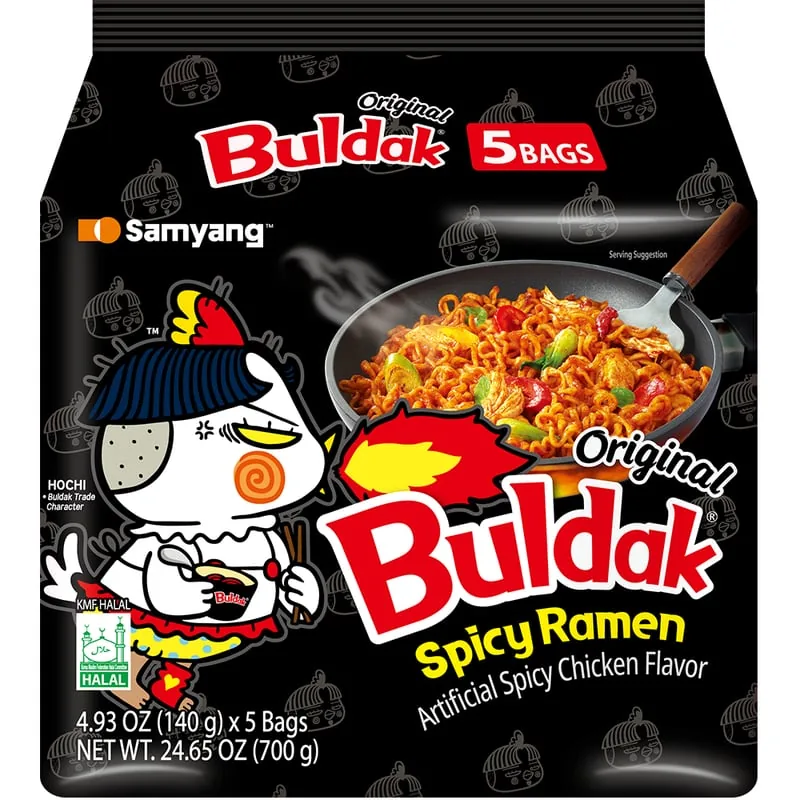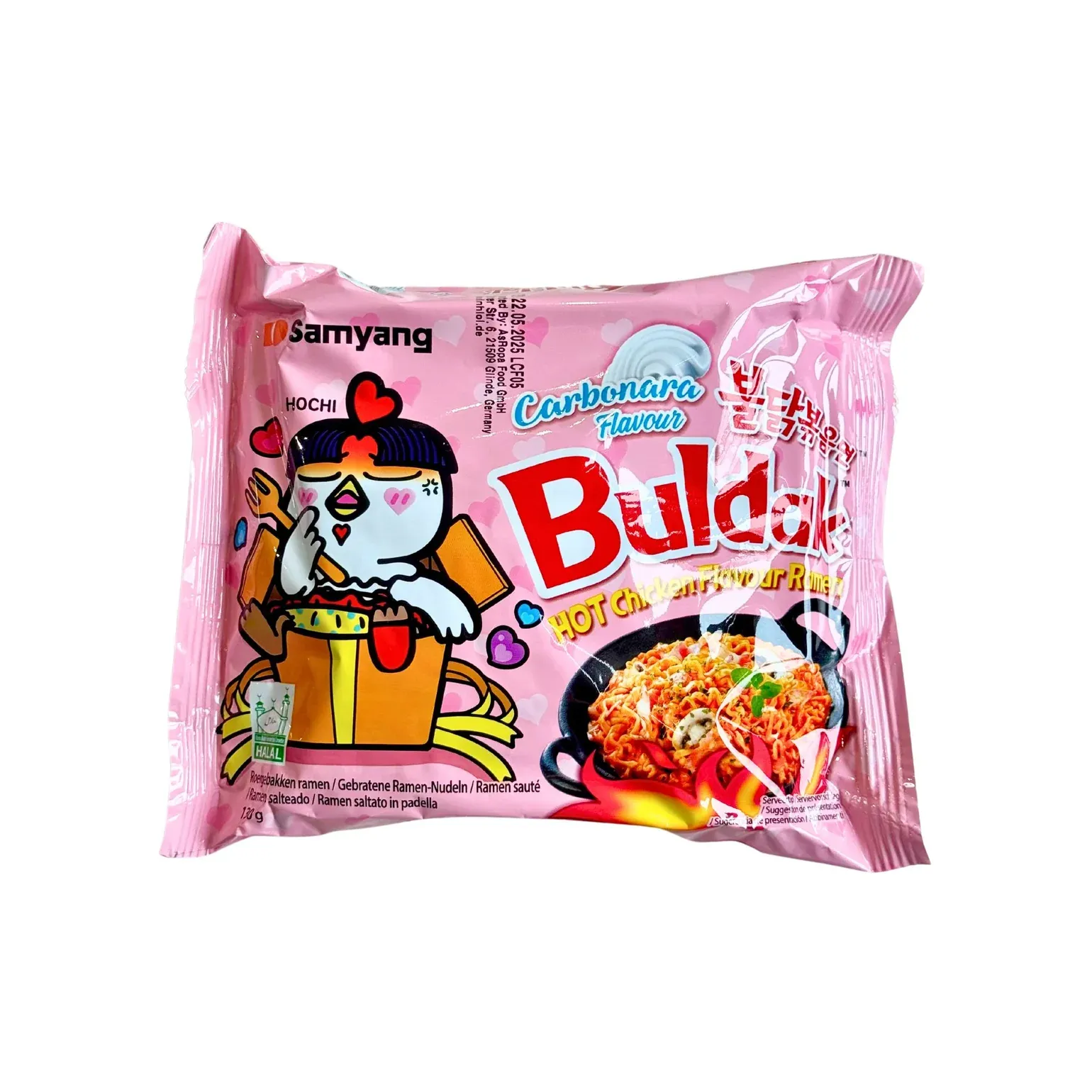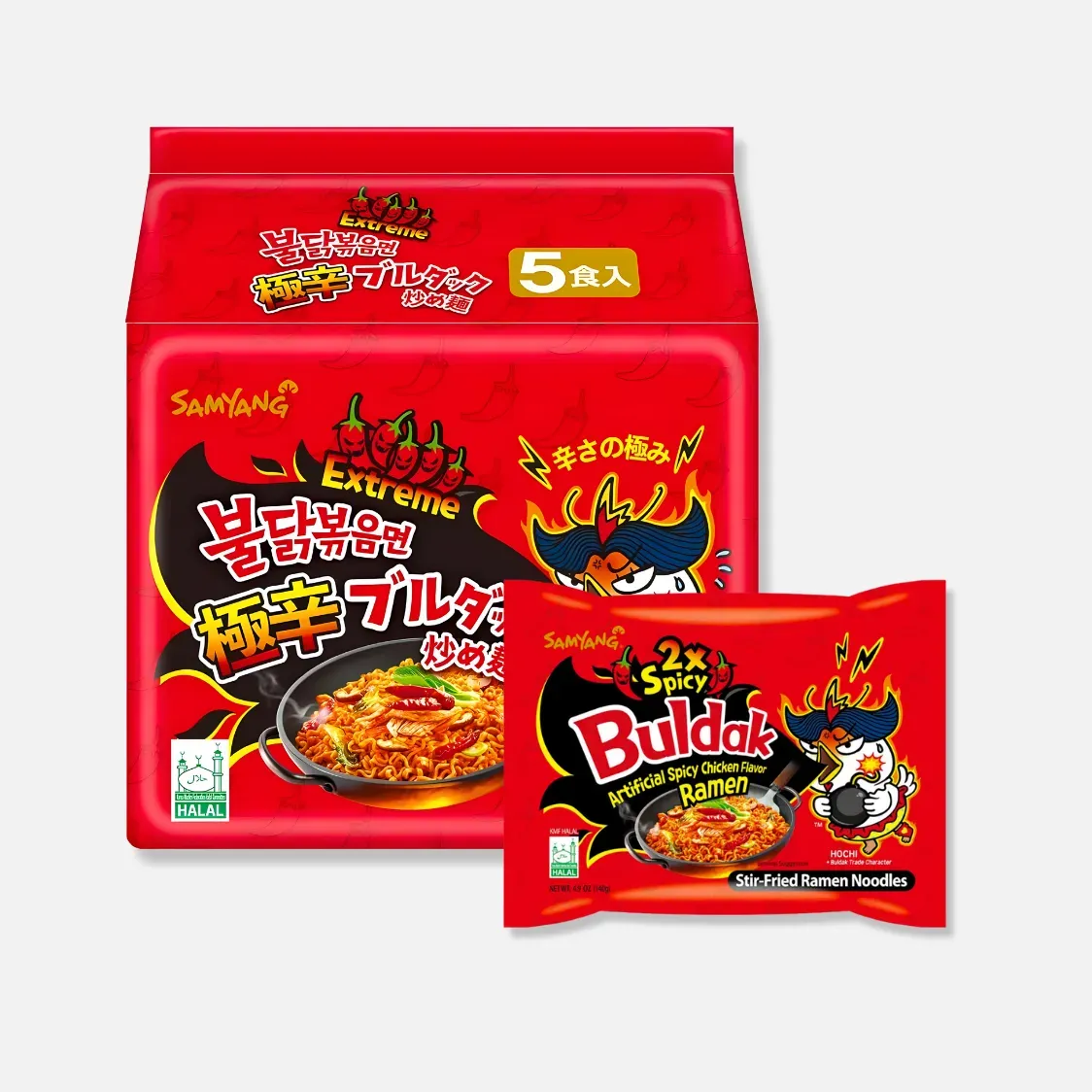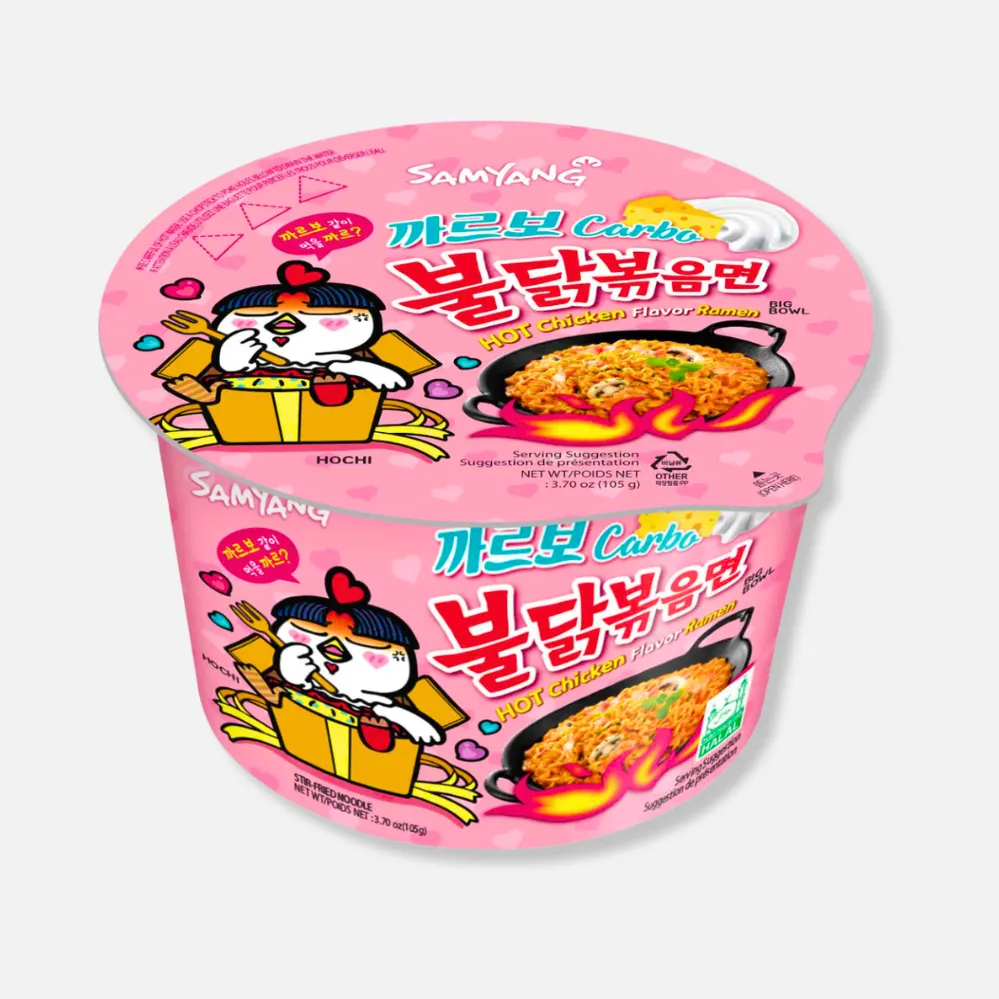
The Korean instant noodle category attracts intermediaries, and it is easy to understand why. Demand is strong across a wide range of markets, the brand is internationally recognised, and the goods are shelf-stable, densely packaged and simple to hold. Those conditions make it straightforward for a business with no direct relationship to the manufacturer to present itself convincingly as a source of bulk Korean instant noodles.
Most are legitimate traders doing useful work. Some are not, and the difference is rarely visible on a website. For a buyer committing working capital to a first container, the ability to tell them apart is worth more than a few percentage points on the unit price.
This article sets out how to evaluate a Samyang Buldak wholesale supplier before you commit. It is written from the supplier’s side of the table, which we think makes it more useful rather than less: everything below is a question we would expect a serious buyer to put to us.
Start with the specification, not the price
The first question is not what something costs. It is precisely what you are being offered.
Ask for the product name, pack size, units per carton and the manufacturer, for each line you intend to buy. A supplier who handles these goods daily answers immediately, because the answer is a property of the individual SKU and they have it in front of them. Vagueness here — “Buldak ramen, 40 to a box, assorted flavours” — is the first meaningful signal.
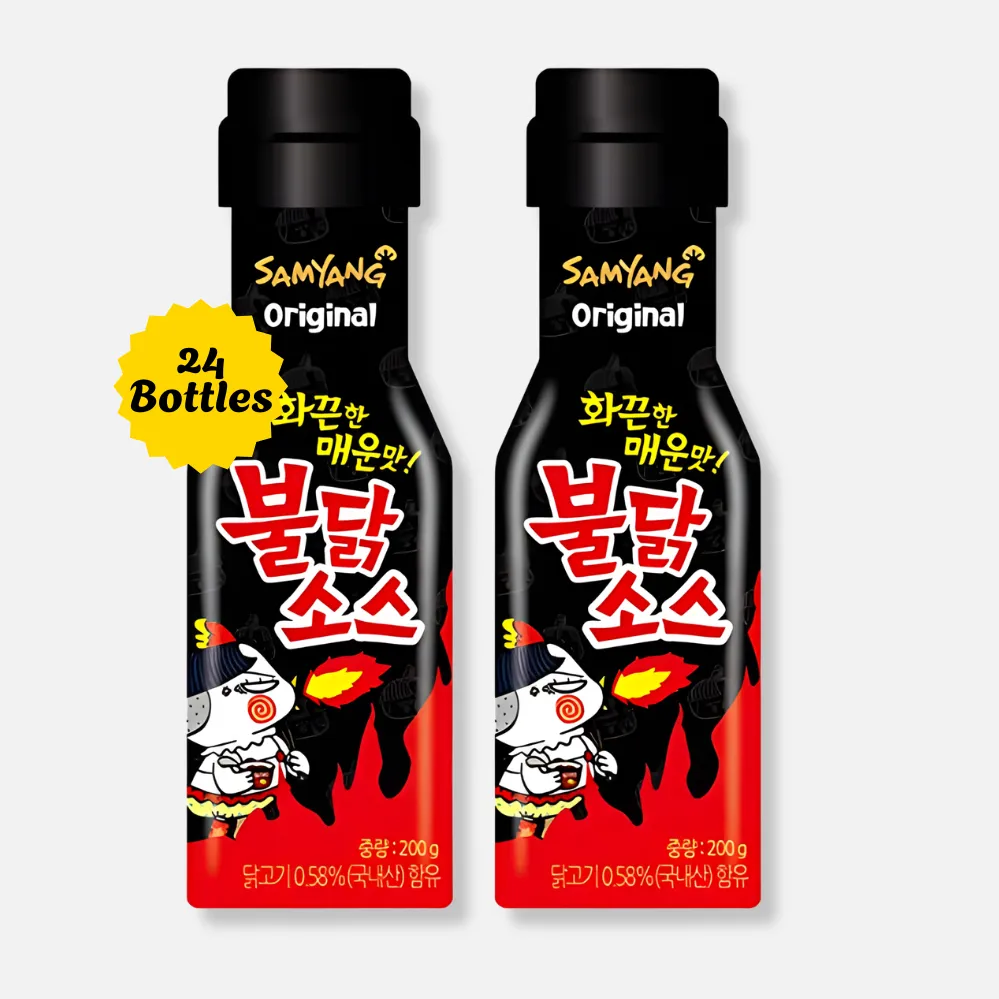
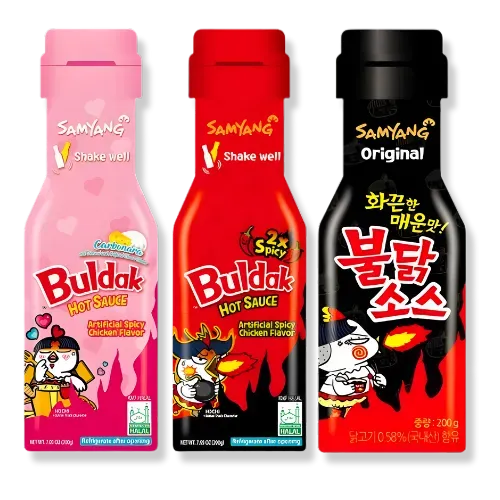
Carton configuration is set per SKU rather than per format. Across the lines we supply, packet ramen is packed 40 packs to a carton, cup noodles 30, bowls 16 and the hot sauces 24 bottles. A supplier who cannot state that figure for the specific line you asked about is not reading from real stock records. Our article on how many Buldak packs are in a carton covers why this number governs everything downstream, from pallet count to landed cost.
Ask which market the packaging is printed for
Korean domestic retail packaging differs from packaging produced for export markets, and the distinction determines whether your consignment can legally reach a shelf in your country. A supplier who has not considered this has probably not considered your regulatory position either. Settle it before goods are produced, because over-labelling in a bonded warehouse after arrival is expensive and slow.
Authenticity and the manufacturer chain
For branded goods, establish the chain between the manufacturer and the business you are dealing with.
Every product we supply is manufactured by Samyang Foods Co., Ltd. in South Korea, and that statement is grounded in the specification records held for the range. What a buyer should test is whether a prospective supplier will make an equivalent statement plainly, and whether it remains consistent across the whole conversation.
Be appropriately sceptical of claims of exclusivity or sole authorisation, from anyone. Such arrangements exist, but they are narrower and considerably rarer than the number of businesses claiming them. A claim of that kind is easy to make and hard for a buyer to verify. In practice, a supplier who describes their position accurately — including its limits — tends to be more reliable than one who describes it impressively.
Read the quotation properly
A wholesale quotation is not a price. It is a specification with a price attached, and it should be legible enough to act on without a follow-up call.
A usable quotation names each product with its pack size and units per carton, the number of cartons, the price per carton and per unit, the currency, the Incoterms and named place, the country of origin and manufacturer, the preparation and shipping time, and what the price excludes. In this trade, goods are normally quoted separately from freight, insurance and duties. A single blended figure with no breakdown is not something you can compare against another offer.
Two food-specific items belong in it and often have to be requested. Ask for the remaining shelf life at shipment for the batch being supplied, in writing. Our products carry a 10–12 month shelf life from production, but that is the total life of the product, not what remains when a consignment lands — a distinction with real commercial consequences, set out in shelf life and storage of instant noodles. Then ask which documents will accompany the consignment.
A supplier who declines to put remaining shelf life in writing is telling you something worth hearing.
Price that makes sense
A price materially below the rest of the market is information, not an opportunity. Legitimate explanations exist — short-dated stock, a currency position, a discontinued line, genuine volume. Ask which one applies. Where the answer is unconvincing or absent, the plausible remainder is usually short-dated goods, packaging for another market, product that has been stored badly, or goods that do not exist.
The reverse test matters too. A quotation should be specific enough to model before you commit to anything: a price per carton for each line, the carton quantity it assumes, what is and is not included, and how long it holds. Our catalogue publishes the pack size and carton configuration for every product and quotes pricing against your order, with tiered volume discounts by order size — so you can request a quotation, build a quantity from it and sanity-check the result independently against the method in calculating retail margin on instant noodles. A supplier who will not put the figure in writing against a named quantity is the one to worry about.
Minimum order quantity, and whether mixing is allowed
Two suppliers can quote the same minimum and mean entirely different things by it.
The question to ask is whether the minimum applies per order or per line. A 200-carton minimum applied per flavour is a different proposition from the same figure applied to the order as a whole. Ours applies to the order as a whole, so a single consignment can combine packet ramen, cup noodles, bowls and sauces in whatever proportion suits your customers — which is what makes it possible for a new buyer to test the category across several lines rather than betting on one. The minimum order quantity guide works through what 200 cartons converts to in portions and pallets, and choosing which flavours to stock covers how buyers usually structure that first mix.
For a buyer entering the category, the ability to mix is often worth more than a marginal discount.
Payment terms, and protecting the transaction
Telegraphic transfer against a proforma invoice is the standard mechanism in this trade and the one we use. No payment is taken through our website; our payment method page sets out the process.
TT is fast and inexpensive, but it offers limited recourse once funds are sent, which puts the emphasis on verification beforehand. Three checks are worth making on every transaction, with any supplier. Confirm that the bank account name matches the company name on the proforma invoice. Verify banking details through a channel other than the email that supplied them. And treat any mid-transaction change of payment instructions as suspect until independently confirmed, however plausible the explanation. Invoice-redirection fraud is the standard failure mode of international trade payments, and a short phone call to a previously known number defeats it.
Ask for the deposit and balance structure to be stated explicitly on the proforma rather than assumed, along with the trigger for each stage.
Shipping arrangements and documentation
Confirm the Incoterm before comparing any two prices, because it determines what the price actually covers. Under EXW the buyer assumes nearly everything; under FOB the seller delivers onto the vessel at a named port; under CIF the seller arranges carriage and insurance to the destination port, though risk transfers earlier than many buyers expect.
Establish realistic timing as preparation plus transit, not a single optimistic figure. Ours is a 7–10 day preparation window, with sea transit of 45–60 days or air freight at 7–14 days, loading ex Laem Chabang Port, Thailand. The shipping and delivery page covers what sits outside the goods price, and the wholesale ordering process guide sets out the sequence.
On documentation, a capable supplier tells you which documents they can provide and which they cannot, rather than agreeing to everything and going quiet later. Commercial invoice, packing list and certificate of origin are standard. Whether a health or free-sale certificate, import permit or product registration applies depends on your destination, and confirming that with your customs broker before the first order is the single cheapest piece of preparation available to an importer.
Communication as a diagnostic
How a supplier communicates before an order is the best available predictor of how they will communicate when something goes wrong — and across a 45–60 day sea transit, something eventually will.
Look for specific answers to specific questions, a named individual who stays with the enquiry, and a willingness to tell you something you did not want to hear: that a line is unavailable, that a certificate cannot be obtained for your market, that a date is optimistic. Suppliers who never deliver bad news before an order are not more reliable for it; they are deferring it. Pressure runs the other way — urgency about an expiring price, or reluctance to put terms in writing, is a reason to slow down.
Apply the same test to us
It would be odd to publish a due-diligence method and exempt ourselves from it.
We supply Samyang products wholesale to importers, distributors, wholesalers, supermarkets, convenience stores and retail chains. Our catalogue, pricing, carton configurations, minimum order, shelf life and lead times are published rather than disclosed on request, and where we do not hold verified information — a flavour description, a barcode we cannot confirm, a photograph we cannot authenticate — the site says so rather than filling the gap. Our buying guide and about us page set out the commercial terms and who we are.
Put the questions above to us. If any answer is unsatisfactory, that is a useful result, and it will have cost you an email.
Request a wholesale quotation
Choosing a Samyang noodles distributor is mostly a matter of asking specific questions early and declining to proceed until they are answered. Almost all of it can be done before any money moves, and the buyers who run into difficulty in this category are rarely the ones who asked too much.
Every product in our catalogue lists its pack size, units per carton and carton configuration, so you can assemble and cost an order before contacting anyone. When you have a shortlist, send it through with your destination port and we will confirm carton configurations and shelf-life position for those specific lines, tell you which documents we can supply for your market, and quote goods and freight together.
Frequently asked questions
- How do I verify that a Samyang Buldak wholesale supplier is genuine?
- Start with the product specification rather than the price. Ask for the product name, pack size, units per carton and the manufacturer for each line you intend to buy. A supplier working from real stock records answers immediately, because carton configuration is a property of the individual SKU. Then ask for the remaining shelf life at shipment in writing, and ask which documents they can supply for your destination market. Reluctance on either point is informative.
- What should a wholesale quotation contain?
- Each product with its pack size and units per carton, the number of cartons, price per carton and per unit, the currency, the Incoterms and named place, country of origin and manufacturer, preparation and shipping time, and what the price excludes. In this trade goods are normally quoted separately from freight, insurance and duties — a single blended figure with no breakdown cannot be compared against another offer.
- Does the minimum order quantity apply per product or per order?
- It depends on the supplier, and it is worth asking explicitly. Ours is 200 cartons applied to the order as a whole rather than per flavour or per format, so a single order can combine packet ramen, cup noodles, bowls and sauces in any proportion. A minimum applied per line is a materially different proposition for a buyer testing the category.
- What payment terms are normal when importing Korean instant noodles?
- Telegraphic transfer against a proforma invoice is the standard mechanism, and it is the one we use. No payment is taken through our website. Because TT offers limited recourse once sent, verify that the bank account name matches the company name on the proforma, confirm banking details through a channel other than the email that supplied them, and treat any mid-transaction change of payment instructions as suspect until independently confirmed.
- Should I be cautious about a supplier offering prices well below the market?
- Yes. A price materially below the rest of the market is information rather than an opportunity. Legitimate explanations exist — short-dated stock, a currency position, a discontinued line, genuine volume — so ask which one applies. Where the answer is unconvincing or absent, the plausible remainder is usually short-dated goods, packaging printed for another market, product that has been stored badly, or goods that do not exist.
- What documents should a supplier provide for an import consignment?
- Commercial invoice, packing list and certificate of origin are standard. Whether a health or free-sale certificate, import permit or product registration also applies depends entirely on your destination, and should be confirmed with your customs broker before the first order. A capable supplier tells you which documents they can obtain and which they cannot, rather than agreeing to everything and going quiet later.
- How long does a wholesale order take to arrive?
- Ask for timing as preparation plus transit rather than a single figure. Ours is a 7–10 day preparation window, followed by sea transit of 45–60 days or air freight at 7–14 days, loading ex Laem Chabang Port, Thailand. Freight, insurance and duties are quoted separately from the goods.