Buying the right range is half the job. The other half happens on the shelf, and it is where most of the value in this category is won or lost. Korean instant noodles are an unusual retail proposition: strong brand recognition, a customer base that often arrives knowing exactly what it wants, and a heat gradient that works as a merchandising structure in its own right if you use it.
This article is about execution — where the category belongs, how to arrange it, and how to decide depth. It assumes you have already chosen a range; if you are still at that stage, the best Samyang Buldak flavors for wholesale buyers covers selection.
Where the category actually belongs
The first decision is also the most consequential: world foods aisle, or mainstream noodle fixture?
The world foods aisle is the conventional answer and the safer one. Customers looking for Korean products go there deliberately, adjacency to other Asian lines helps, and the fixture usually tolerates a wider range with less pressure on rate of sale.
The mainstream noodle fixture reaches a different shopper — the one who was not looking for Korean food and had no plan to buy it. That shopper is the growth in this category. The trade-off is that mainstream fixtures are ruthless about rate of sale, and a slow line will be delisted before it has been discovered.
Where space permits, the arrangement that tends to work is a core presence in world foods carrying the range, plus a small mainstream placement of two or three recognised lines. If you must choose one, choose based on whether your objective is serving existing demand or creating new demand — different jobs, different fixtures.
Build the heat ladder, and make it legible
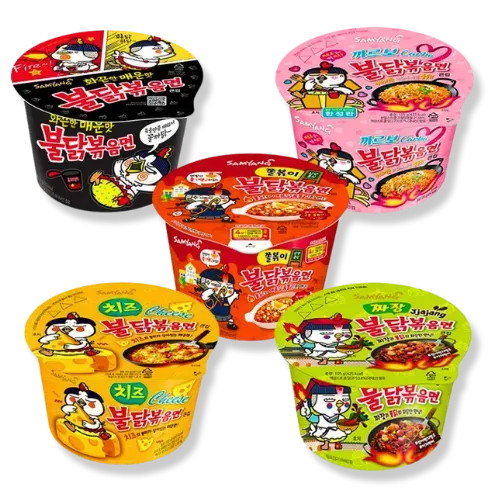
The Buldak range is built on a single hot chicken base with variations that either raise the heat or round it off with dairy, fermentation or sweetness. That structure is a merchandising asset, and it is wasted when flavours are shelved in whatever order they came out of the carton.
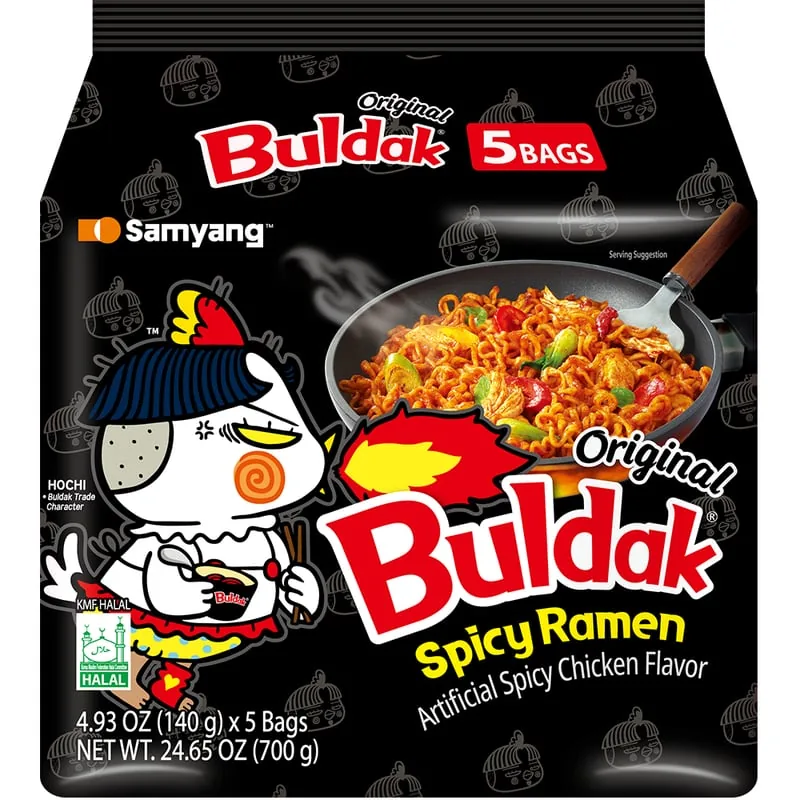
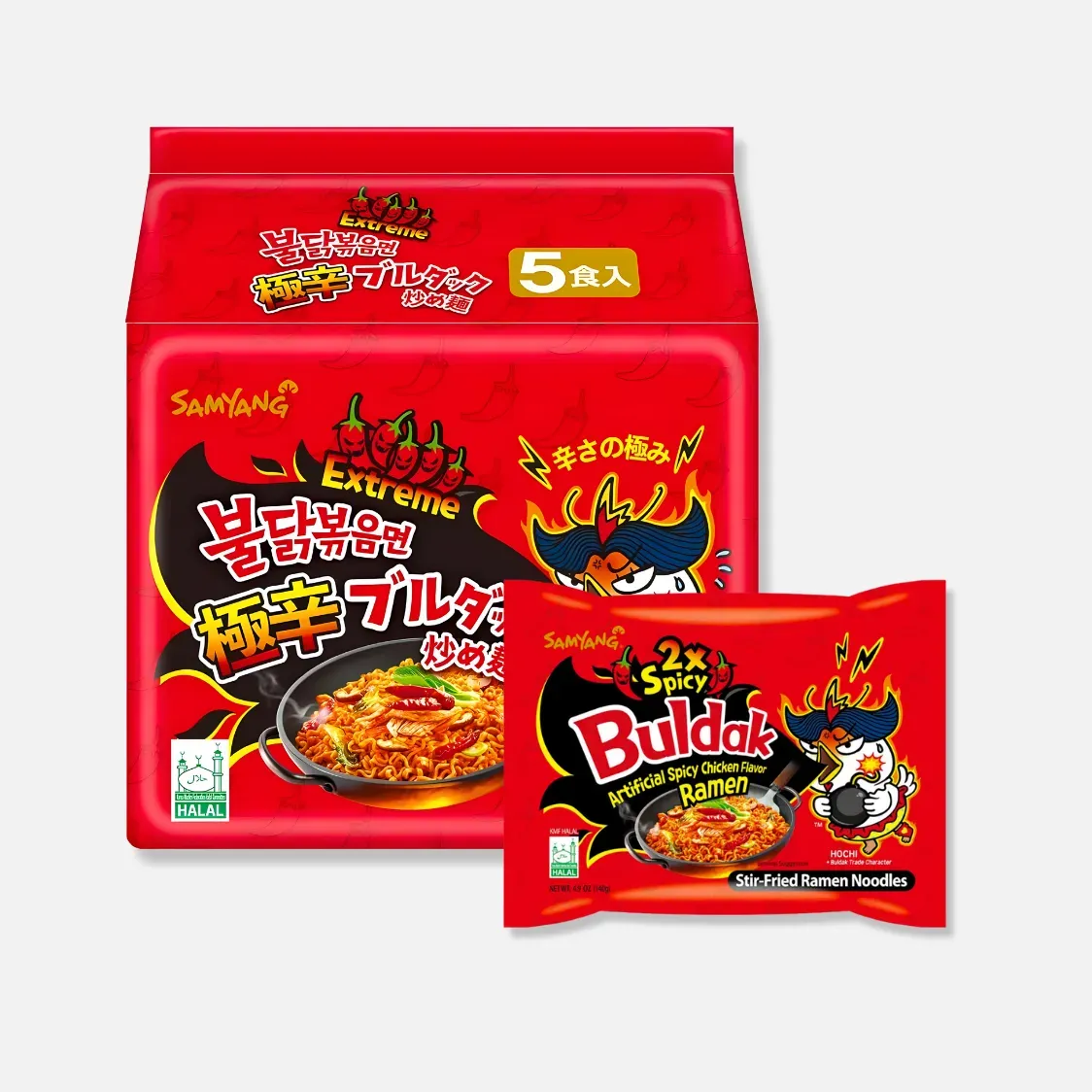
Arrange the heat-led lines in ascending order and adjacent: the original hot chicken flavour, then 2X Spicy, then 3X Spicy. The progression is the proposition. A customer who has eaten the original can see, without asking, where to go next — and that step up is the repeat purchase which makes the category profitable rather than merely present.
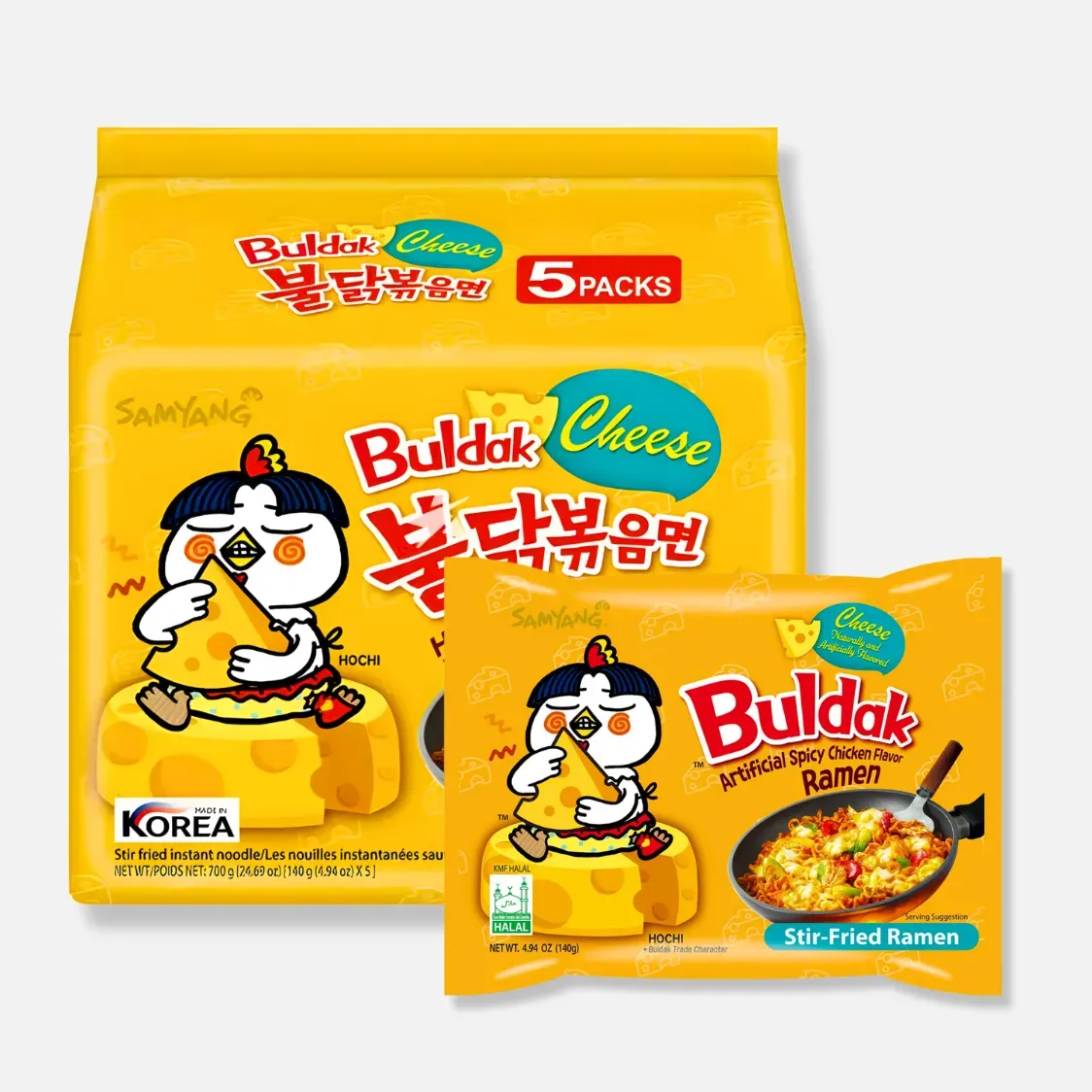
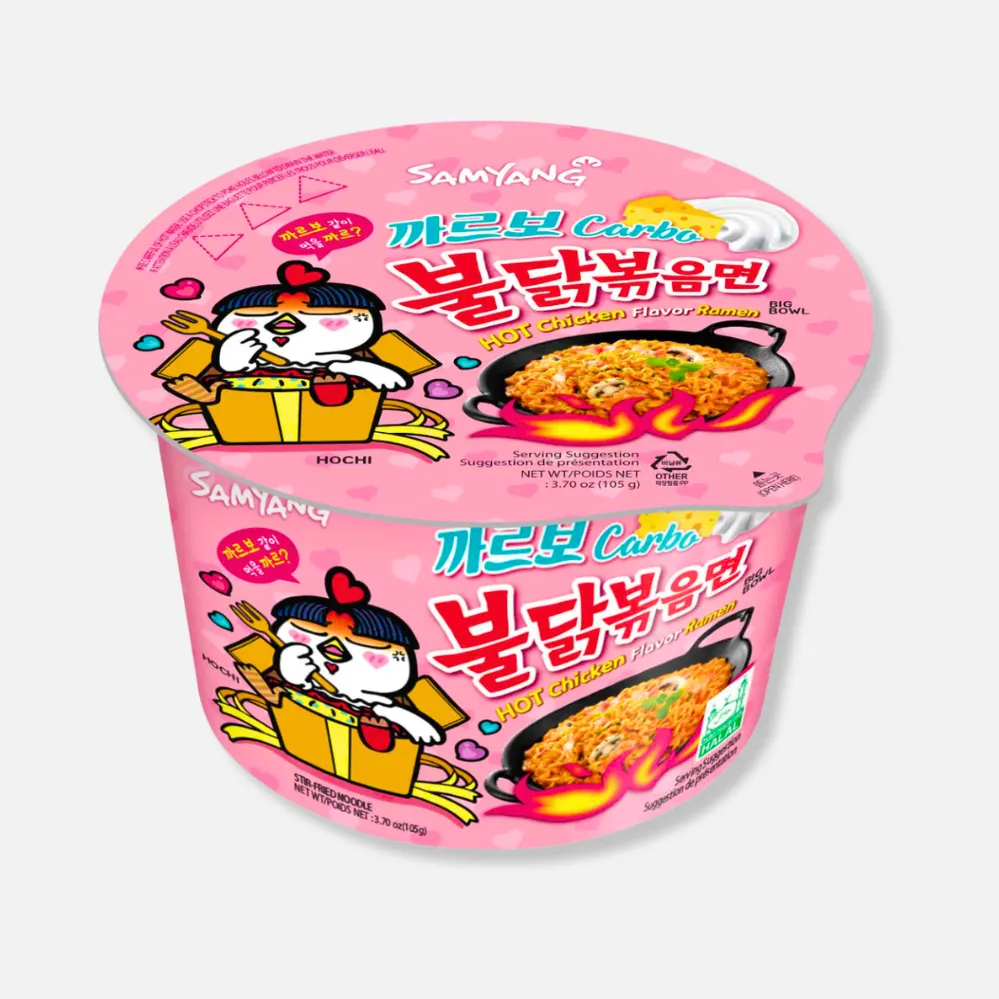
Block the milder variants together as well. Carbonara, cheese and quattro cheese belong beside each other because they solve the same shopper problem: the customer who is interested but deterred by the heat reputation. Scattering them through the fixture means the cautious shopper never finds the option that would have converted them.
Format follows footfall
Pack format should track how customers in each location actually eat, not what is cheapest per portion.
Packet ramen suits grocery and supermarket shopping, where the customer is buying to cook at home. It offers the lowest cost per portion in the range and is the volume engine of most orders.
Cup noodles and bowls suit convenience, transport, campus and workplace retail — anywhere hot water is available and the customer eats near where they bought. Both go straight to shelf as sealed retail units with their own barcodes, requiring no repacking. Bowls carry a larger portion and support a higher retail price; cups are the impulse format.
Our packet, cup or bowl guide covers the commercial differences in detail. The merchandising point is narrower: a convenience store stocking packets because they are cheaper per portion has misread its own customer, and a supermarket stocking only cups has left the volume on the table.
The facings arithmetic
Range width is the decision buyers agonise over. Depth is the one that determines whether the range works.
Work backwards from the shelf rather than forwards from the carton. Decide how many facings each line needs to look intentional rather than accidental, estimate how fast you expect it to turn, and convert that into cartons. Then check the result against what a carton actually contains: 40 packs, 30 cups or 16 bowls. A single carton of packet ramen covers a great many shelf weeks on a slow line, which is precisely why thin ranges spread across many flavours end up holding stock that will not move while the three sellers run empty.
The discipline that follows is uncomfortable but reliable: fewer lines, more facings. A block of three flavours with four facings each reads as a category and sells as one. Twelve flavours with a single facing each reads as clutter, sells slowly, and generates out-of-stocks on exactly the lines you cannot afford to lose.
Cross-merchandising the sauces
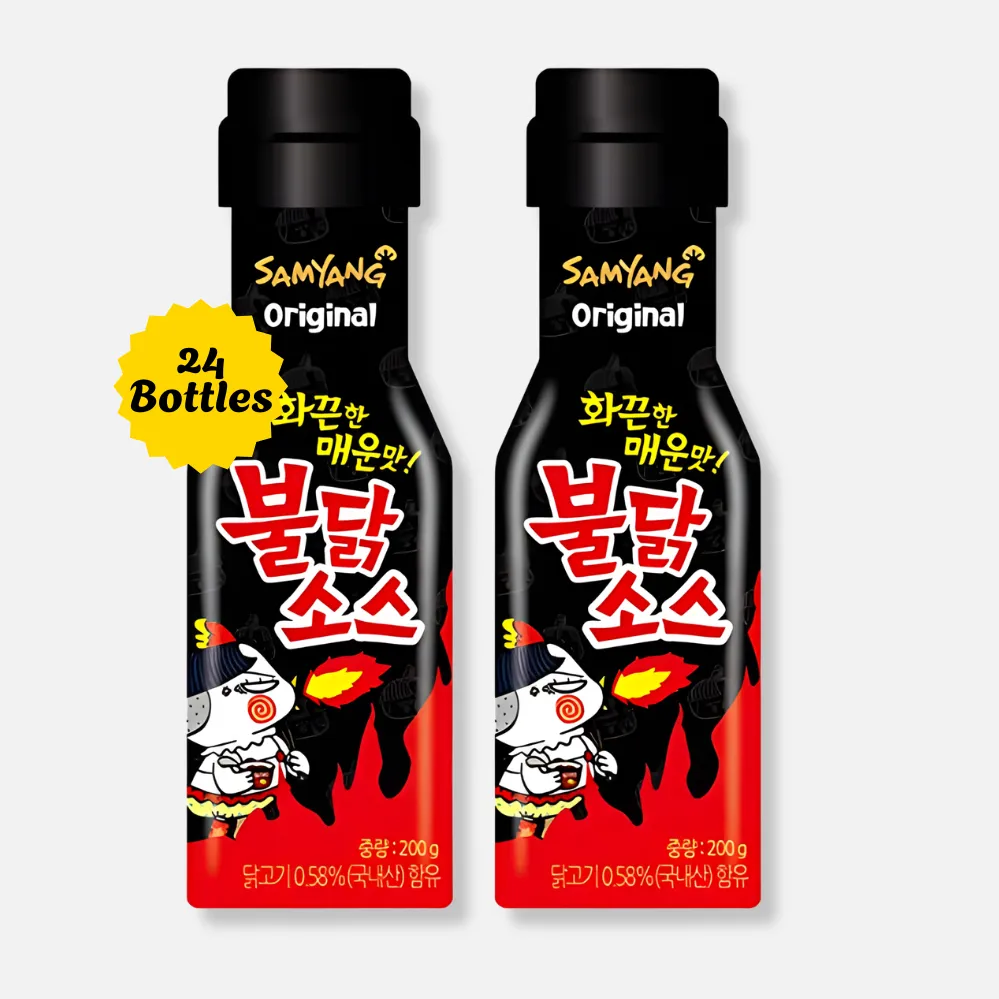
The three Buldak hot sauces are 200g bottles packed 24 to a carton, and they are the cheapest carton in the range. They are also the most underused merchandising opportunity in it.
Sited beside the noodles they add basket value to a customer already buying. Sited in the condiments or hot sauce fixture they reach a completely different shopper — one who may not buy instant noodles at all but recognises the brand. A secondary placement costs a few cartons and puts the flavour in front of an audience the noodle fixture never touches.
Signage, and the language problem
Korean retail packaging is designed for a Korean shopper. Much of what a customer in another market needs to know — what the flavour is, how hot it is, how it is prepared — is either in Korean or absent from the front of pack.
Shelf-edge labelling solves this cheaply. A flavour name in the local language and a simple indication of relative heat converts browsers who would otherwise put the pack back. This is merchandising, not compliance; mandatory information is a separate and non-negotiable requirement covered in customs documents and labelling.
Resist the temptation to invent heat ratings. We do not publish Scoville figures for any line because none exist in our product data, and a number invented at shelf level is a claim your business owns. Relative ordering — mild, hot, hotter — follows the manufacturer’s own naming and is defensible.
Rotation and the date discipline
Instant noodles are forgiving but not indefinite. The range carries a 10–12 month shelf life from production, and what reaches your shelf is what remains after transit and clearance.
Rotate on date rather than on arrival. A later delivery can easily carry an earlier date than stock already in your racking, which is why first-expired-first-out is the correct discipline for dated goods and first-in-first-out is not. Front the earlier-dated stock, and pull damaged packs rather than leaving them for a customer to find — cups and bowls show crush damage clearly, while film-wrapped packet ramen needs a closer look at the seals. The full treatment is in shelf life and storage of instant noodles.
Measure what actually happened
The second order should not look like the first. Track rate of sale by line, not by category, and be honest about which flavours moved because they were good and which moved because they were at eye level.
The range is wide enough — 56 products across packet, cup, bowl and sauce formats — that you do not have to guess twice. Reallocate depth toward what sold, drop what did not, and use the freed space to test one or two new lines rather than broadening everything at once. Our guide to calculating retail margin covers how to hold the arithmetic steady while you do it.
From plan to order
Good merchandising is mostly arithmetic and restraint: match the format to the channel, group the range so it explains itself, put depth behind the lines that earn it, and rotate properly.
Every product in our catalogue lists its pack size, units per carton and carton configuration, so you can build a planogram and cost it before you speak to anyone. The 200-carton minimum applies to the order as a whole, so a first order can be assembled across formats and flavours to match the shelf plan rather than forced into a single line. When you have a shortlist, send it through with your destination port and we will confirm carton configurations and quote goods and freight together.
Frequently asked questions
- Should Korean ramen go in the world foods aisle or the main noodle fixture?
- The world foods aisle is the safer answer: customers looking for Korean products go there deliberately and the fixture tolerates a wider range. The mainstream noodle fixture reaches shoppers who were not looking for Korean food at all, which is where category growth comes from, but it is ruthless about rate of sale. Where space permits, a core presence in world foods plus two or three recognised lines in the mainstream fixture works best.
- How should Buldak flavours be arranged on the shelf?
- Group them by what they do. Arrange the heat-led lines in ascending order and adjacent — original, then 2X Spicy, then 3X Spicy — because the progression is the proposition and it shows a returning customer where to go next. Block the milder dairy-rounded variants together, since carbonara, cheese and quattro cheese all solve the same shopper problem.
- Which pack format suits which retail channel?
- Packet ramen suits grocery and supermarket shopping, where the customer cooks at home, and offers the lowest cost per portion. Cups and bowls suit convenience, transport, campus and workplace retail, where hot water is available and the customer eats near where they bought. Both go straight to shelf as sealed retail units needing no repacking.
- Is it better to stock more flavours or more of each?
- Depth, in most cases. A block of three flavours with four facings each reads as a category and sells as one; twelve flavours with a single facing each reads as clutter and generates out-of-stocks on exactly the lines you cannot afford to lose. Work backwards from facings and expected rate of sale, then convert to cartons.
- How should retailers rotate instant noodle stock?
- On date rather than arrival. A later delivery can carry an earlier date than stock already in your racking, so first-expired-first-out is the correct discipline for dated goods and first-in-first-out is not. Front the earlier-dated stock and pull damaged packs — cups and bowls show crush damage clearly, while film-wrapped packet ramen needs a closer look at the seals.