Almost everything written about wholesale instant noodles is written for retailers. It assumes you are buying to put product on a shelf, and that the person who eats it will prepare it at home.
A kitchen buys the same cartons for an entirely different reason. You are not selling the pack — you are selling what comes out of it, on a plate or in a bowl, prepared by your staff under service pressure. That changes which formats are usable, how the cost works, and which parts of the range matter.
This article is for restaurant, café, canteen and contract-catering buyers. It covers what a commercial kitchen can actually do with each format, how portion cost works, and where these products sensibly sit on a menu.
What foodservice buys differently
Three differences change the buying decision.
You are buying labour as well as goods. A format that needs a pan, boiling water and draining costs kitchen time during service. A format that needs only hot water costs almost none. On a retail shelf that distinction is invisible; in a kitchen it is often decisive.
Your unit economics run per portion, not per pack. Retailers work backwards from a shelf price. A kitchen works backwards from a menu price and a plate cost, and the noodle is usually one component of a dish rather than the whole thing.
Your shelf life problem is different. A retailer rotates stock a shopper will take home. A kitchen holds stock in a back-of-house store and consumes it unpredictably — busy weeks clear it, quiet weeks leave it sitting. The 10–12 month shelf life is generous for that pattern, but it still rewards ordering against realistic consumption rather than optimism.
The three preparation realities
The range splits into formats that behave very differently once they reach a kitchen. Our format comparison guide covers the commercial differences; what follows is the operational side.
Packet ramen — the only format that needs a cook line
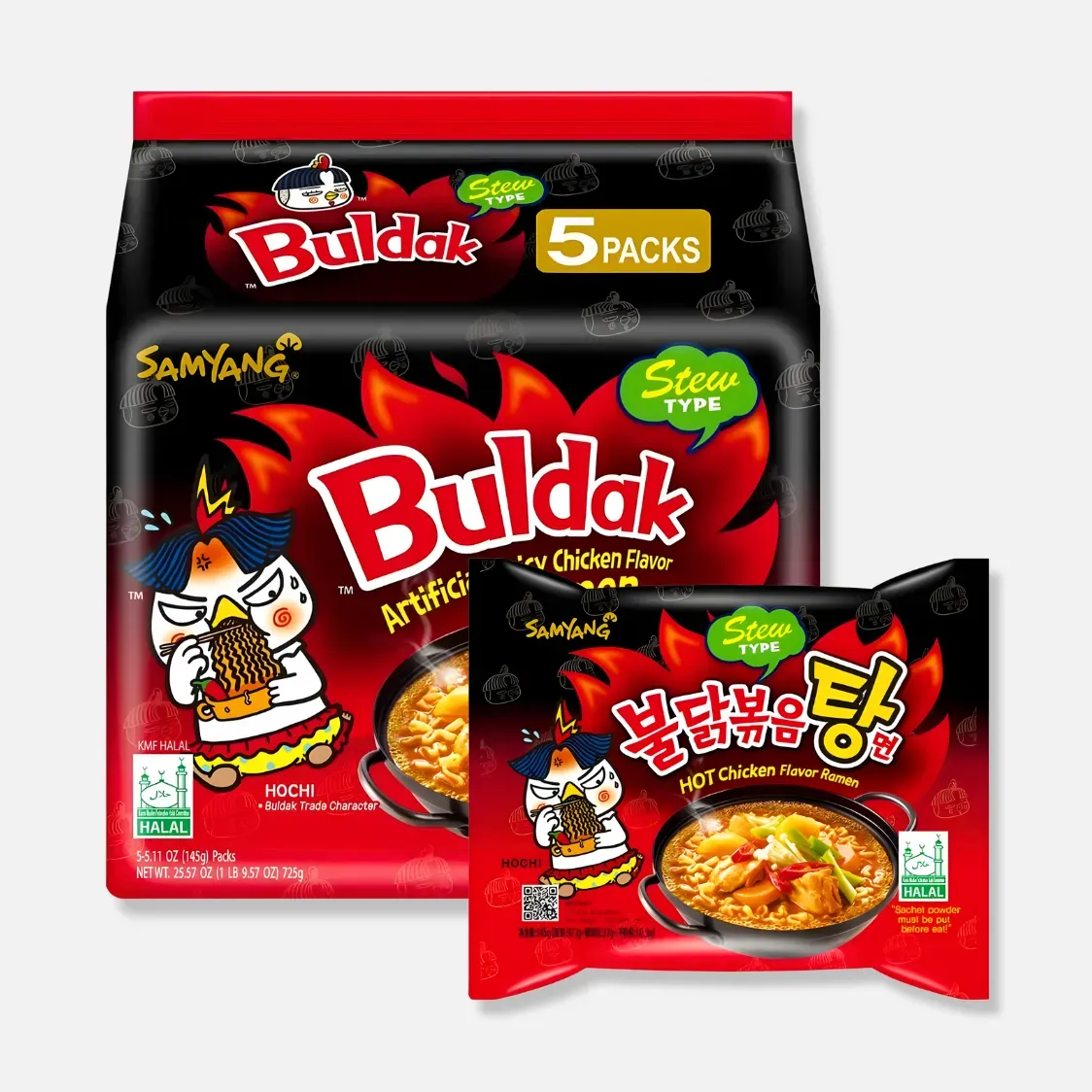
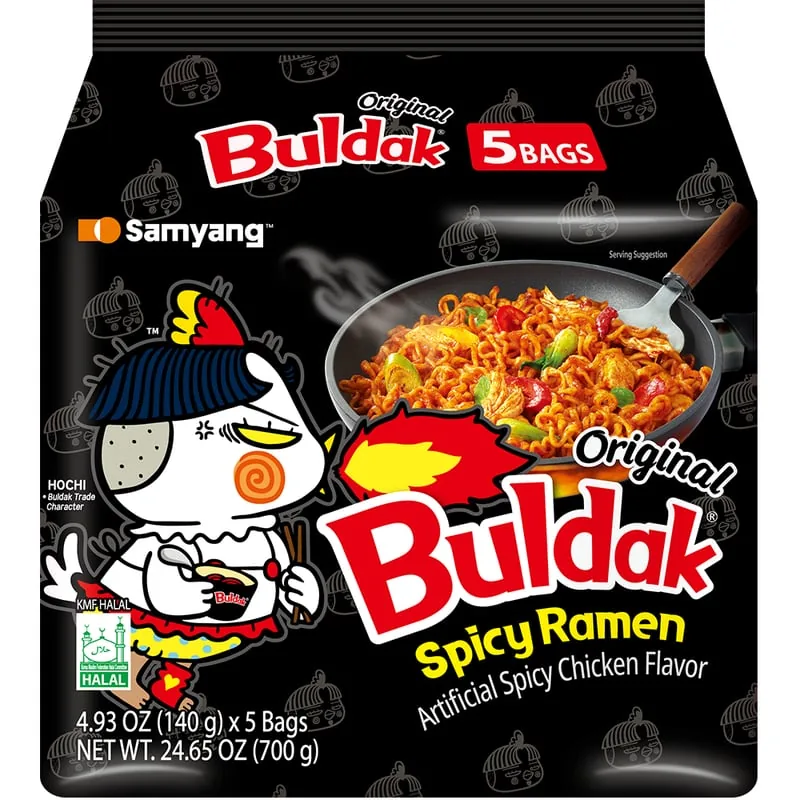
Packet ramen is a dry stir-fried noodle. It needs boiling water, a pan and draining, and the sauce is then stirred through rather than diluted into a broth. That is a genuine cooking step, not a reheat.
The payoff is control and cost. You decide the portion, you can add protein or vegetables, and gram for gram it is the cheapest noodle in the range. If you have a cook line and want the noodle as a base you build on, this is the format.
Across the packet lines, 40 packs come to a carton, and each pack is a 130–145g portion — roughly twice the noodle in a cup. Spreading a carton across forty full-size portions is what makes this format the lowest goods cost per gram of noodle we supply.
Cups and bowls — hot water and nothing else
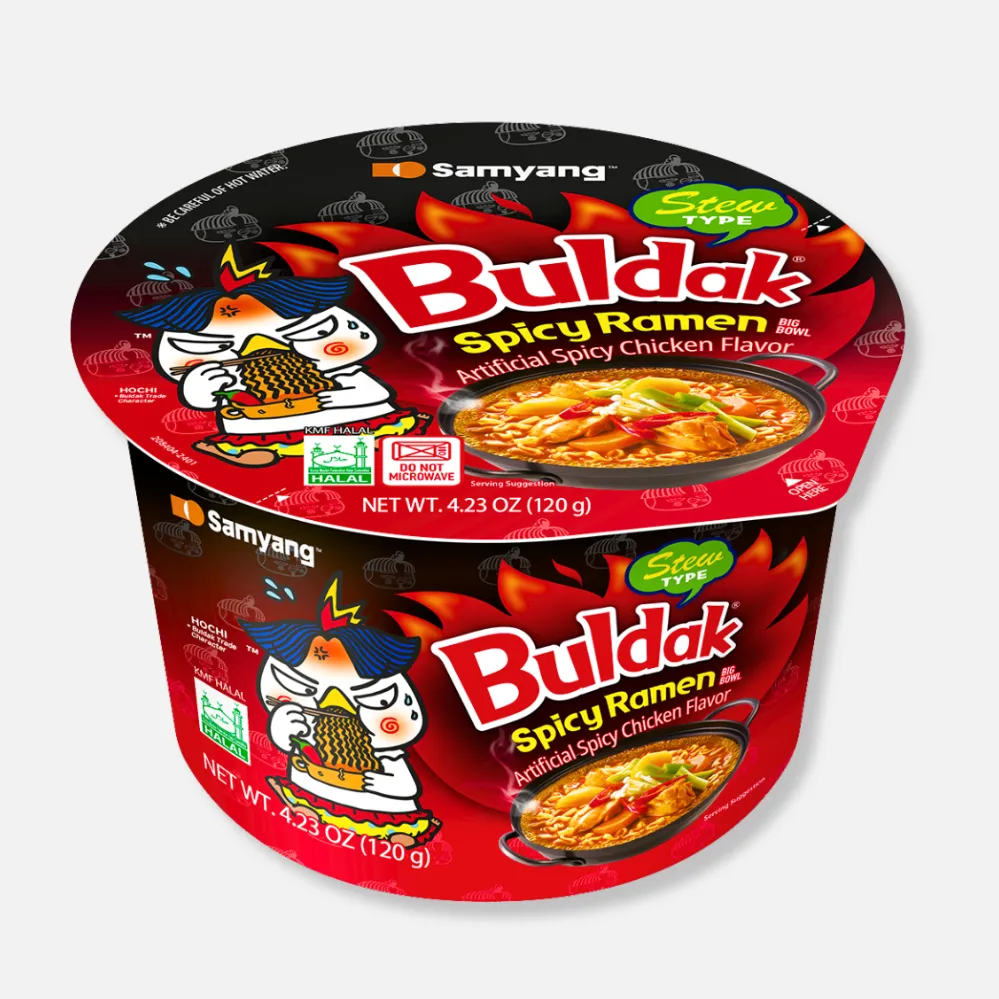
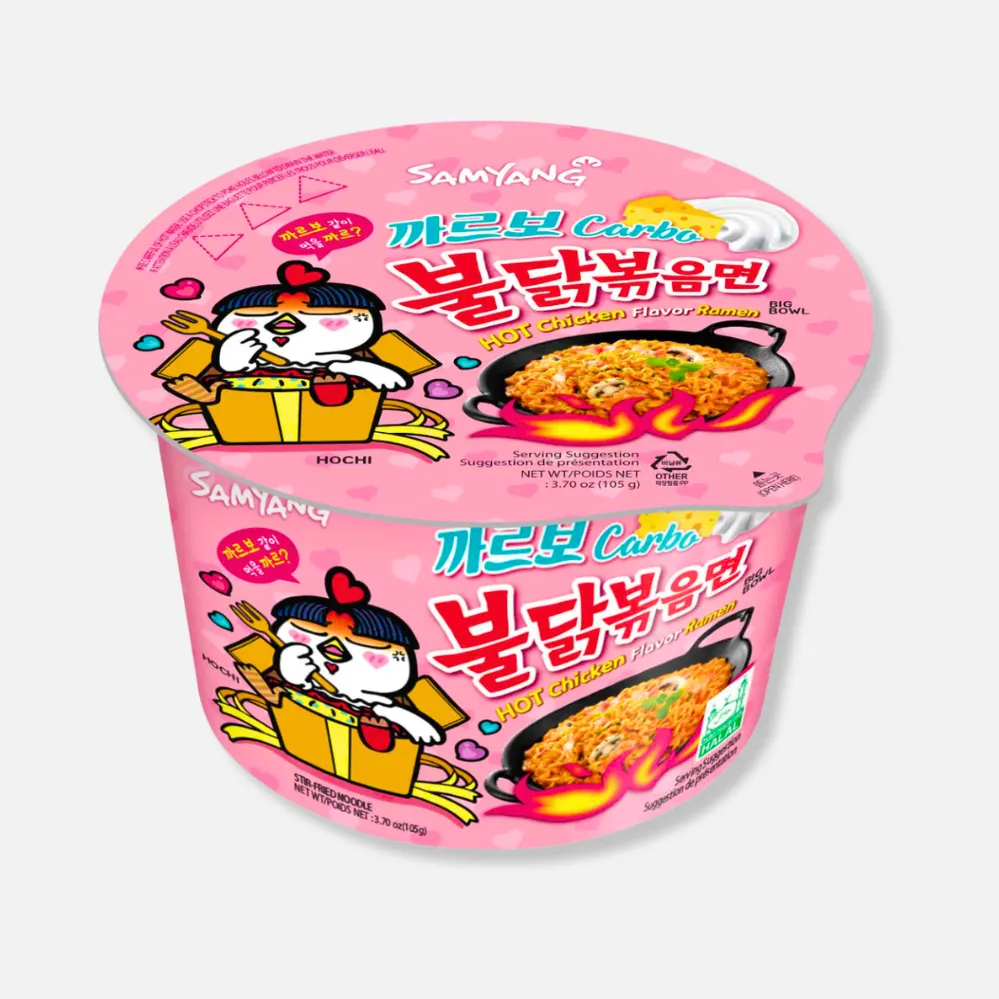
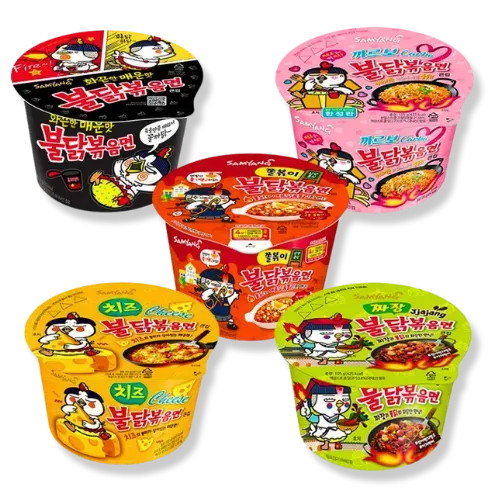
Cup noodles and bowls need no equipment beyond hot water and no preparation skill. They are sealed single portions served in the container they arrive in, which also means no washing up.
That makes them the format for venues without a kitchen: counters, kiosks, canteens, staff rooms, transport and campus sites, hotel pantries and late-night service when the line has closed. They cost more per gram of noodle — part of what you are buying is the container — but the labour cost is close to zero and the failure rate is lower, because there is nothing to get wrong.
Bowls carry the larger portion of the two and support a higher sell price.
Stew type — the only soup in the range
Nearly every Buldak product is a dry, sauce-coated stir-fried noodle. The stew-type packet and the stew-type bowl are the exception: they are built around a hot, thick broth.
This matters more than it sounds for a kitchen. A soup noodle and a stir-fried noodle are different menu items serving different occasions, and if you want a hot bowl of soup rather than a plate of noodles, these are the only two lines in the range that do it. In colder markets and for winter menus, this is often the first line a foodservice buyer should look at.
Portion cost, and putting it on a menu
Start from the carton price in your quotation, divide by the units in the carton, and then — critically — add your landed cost before you price anything. The divisor is the part that is fixed and published:
| Format | Units per carton | Portion size | Where it sits on goods cost |
|---|---|---|---|
| Packet ramen | 40 packs | 130–145g | Cheapest per gram of noodle |
| Cup noodles | 30 cups | 65–80g | Cheapest per unit served |
| Bowls | 16 bowls | 105–179g | Dearest per unit served |
| Hot sauce | 24 bottles | 200g | Cheapest carton in the range |
Carton pricing is quoted on enquiry, so the per-portion figure is one division away once you have your quotation: tell us the lines and quantities and the quotation gives you the numerator. Those are goods figures only. Freight, insurance and duties are quoted separately and are genuinely significant on a product this bulky — our article on freight planning explains why instant noodles price on volume rather than weight. The method for converting carton cost into a true landed cost is set out in calculating retail margin; the arithmetic is identical for a plate cost.
Two practical points.
The noodle is rarely the whole dish. Added protein, egg, vegetables, garnish and packaging usually cost more than the noodle. Price the plate, not the pack.
Portion control is easier than with dried pasta. Each pack, cup or bowl is a fixed single portion, which removes a variable that normally needs weighing and training. For a kitchen with high staff turnover, that consistency has real value.
Where these products fit on a menu
Be honest about what this product is. It is a recognisable branded item with a strong identity, not a neutral ingredient. Customers who order it usually know exactly what they are ordering.
That points to a few sensible uses.
As a named dish built on the noodle. The heat is the draw; adding protein, egg and vegetables turns a single packet portion into a full plate. The flavour is the reason the customer chose it, so there is little point disguising it.
As a late or limited menu. Venues that close their kitchen but keep serving can run cups and bowls with hot water alone.
As a staff or canteen line. Contract caterers and staff restaurants use single-serve formats where speed and zero preparation matter more than margin.
As a seasonal or promotional item. The range is wide enough — 56 products across four formats — to rotate flavours without renegotiating supply. Our guide to choosing flavours covers which lines suit cautious customers and which suit heat-seekers.
What generally does not work is treating it as a cheap filler. The brand recognition that makes it sell is the same recognition that makes customers notice when it is served carelessly.
The sauces are the overlooked part
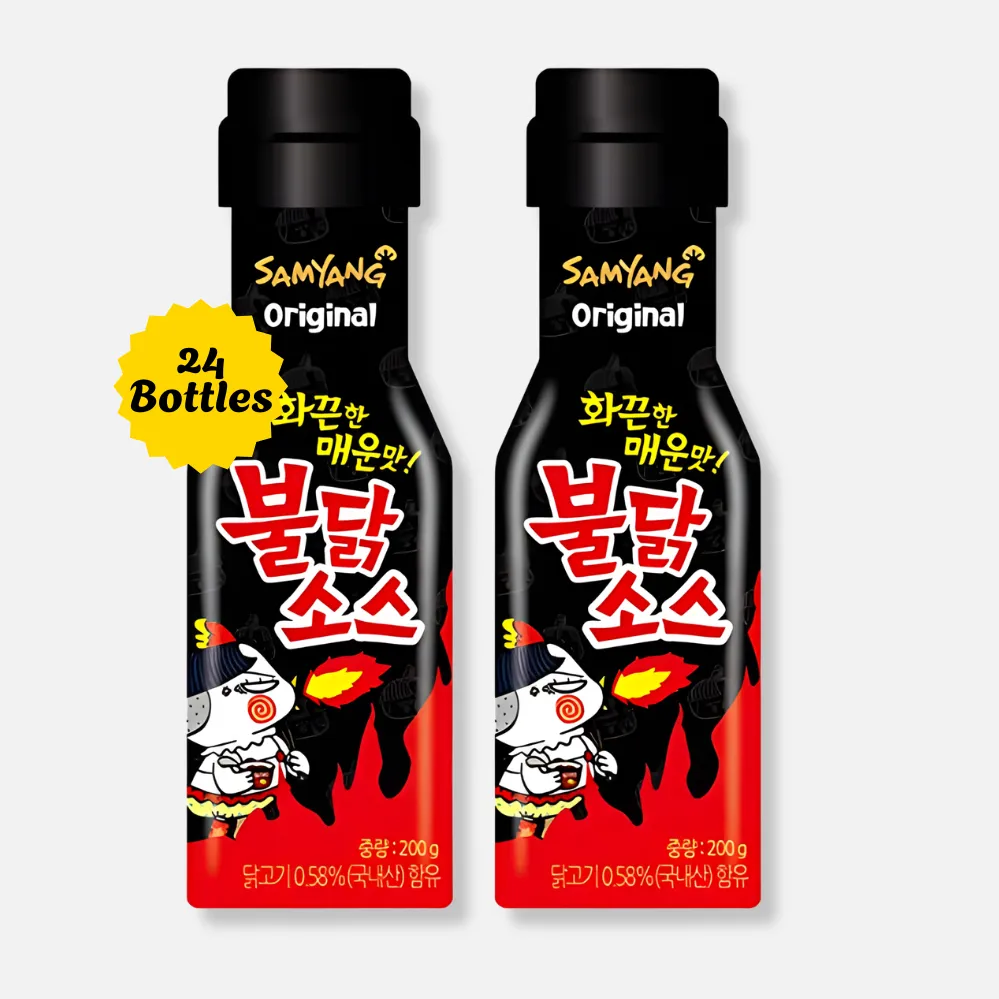
The three Buldak hot sauces are 200g bottles packed 24 to a carton, and theirs is the cheapest carton in the range.
For a kitchen they are the most flexible item we supply. They carry the same flavour identity as the noodles but are decoupled from them, so they work as a table condiment, a finishing sauce, a marinade component or a base for a house sauce. The original is the reference flavour; the carbonara bottle is the mildest of the three and the extremely spicy one sits at the top.
They are also the cheapest way to test whether the flavour lands with your customers before committing to noodle volume. A few cartons on tables, or one menu item built around the sauce, tells you something real.
Storage and rotation in a working kitchen
The guidance for these products is to store in a cool, dry place away from direct sunlight, with no refrigeration needed for unopened packs. In a back-of-house store that means keeping cartons off the floor and clear of walls, away from heat sources and dishwash steam, and not stacking beyond what the carton is built to carry.
Rotate on date, not arrival. A later delivery can carry an earlier date than stock already on your racking, so first-expired-first-out is the correct discipline. Cups and bowls show crush damage clearly; film-wrapped packets need a closer look at the seals. The full receiving and rotation checklist is in shelf life and storage.
Allergens and what front of house needs
This is the part a kitchen must get right and a retailer largely does not.
Instant noodles of this type commonly contain wheat and soy, and the cheese and carbonara variants introduce dairy. Content varies by flavour, which means a general statement about the range is not good enough for a server answering a question at the table.
Request the manufacturer’s specification for each line you intend to serve, keep it where your team can reach it, and brief front of house per dish rather than per brand. If you are importing directly, your market’s allergen labelling rules apply to the pack as well — covered in our article on customs documents and labelling.
Sizing a first order for a kitchen
The minimum order is 200 cartons, applied to the order as a whole rather than per line, so it can be spread across formats and flavours. The minimum order quantity guide works through what that converts to in portions.
For a single site that is a substantial quantity — 200 cartons of packet ramen is 8,000 portions. Most single-venue buyers therefore either order through a distributor or group an order across sites. Multi-site operators, contract caterers and groups usually reach it comfortably.
If you are sizing a first order, work from realistic weekly consumption across a season rather than peak weeks, and weight it toward the formats your kitchen can actually prepare during service. A carton of bowls sitting unopened because nobody has time to serve them is more expensive than a carton of packets that moves.
Requesting a quotation
Every product in our catalogue lists its pack size, units per carton and carton configuration, with a quotation request on every paging, so you can build a plate cost before speaking to anyone. The buying guide covers the commercial terms, and shipping and delivery sets out what is quoted separately from the goods.
When you have a shortlist, send it through with your destination port and we will confirm carton configurations and the shelf-life position of the stock we would ship, alongside a quotation for goods and freight.
Frequently asked questions
- Can restaurants buy Samyang Buldak wholesale?
- Yes. The minimum order is 200 cartons and it applies to the order as a whole rather than per product, so a kitchen can combine packet ramen, cup noodles, bowls and sauces in whatever proportion suits its menu. The terms are the same as for a retailer — the difference is what a kitchen does with the goods, not how it buys them.
- Which Buldak format works best in a commercial kitchen?
- It depends on whether you are cooking or serving. Packets are a dry stir-fried noodle that needs a pan and draining, which suits a kitchen with a cook line and gives the lowest cost per portion. Cups and bowls need only hot water and no equipment, which suits counters, canteens and venues with no kitchen at all. Stew type is the only soup-style product in the range.
- How do you work out the cost of one portion?
- Divide the quoted carton price by the units in that carton: 40 packs, 30 cups, 16 bowls or 24 sauce bottles. Carton pricing is quoted per enquiry, against the flavours and quantities you want. Whichever figure comes back, build your menu price from the landed cost — goods plus freight, insurance and duties — rather than from the carton price alone.
- Do I need special equipment to serve Buldak noodles?
- For cups and bowls, no — hot water is sufficient and the product is served in the container it ships in. For packet ramen you need a pan, boiling water and a way to drain, because the packet format is a dry stir-fried noodle rather than a soup. The stew-type lines are the exception, being built around a broth.
- Can the Buldak sauces be used as a kitchen ingredient?
- That is what they are for. The three 200g sauces carry the same flavour identity as the noodles, decoupled from them, and are used both as a table condiment and in preparation. They are the cheapest carton in the range, which makes them a low-risk way to put the flavour on a menu before committing to noodle volume.
- What allergens do these products contain?
- Instant noodles of this type commonly contain wheat and soy, and the cheese and carbonara variants introduce dairy. Allergen content varies by flavour, so request the manufacturer's specification for each line you intend to serve rather than relying on a general statement about the range — your front of house needs that detail per dish.
- How long do the products keep in a kitchen?
- The Samyang lines we supply carry a 10–12 month shelf life from the production date, stored in a cool, dry place away from direct sunlight with no refrigeration needed for unopened packs. That is the total life from production, not what remains on arrival, so confirm remaining shelf life at shipment for the batch being supplied.
- Is 200 cartons too much for a single restaurant?
- For one site it is a substantial quantity, which is why most single-venue buyers order through a distributor or group their order with other sites. Multi-site operators, contract caterers and groups typically reach the minimum comfortably. The minimum applies to the order rather than the line, so it can be spread across formats and flavours.