Samyang Buldak is one of the few instant noodle ranges that customers search for by name. That makes it a natural fit for an online shop: the demand already exists, the products are compact and shelf-stable, and the packaging is recognisable in a thumbnail. It also means the competition is a search result away, so the shops that keep their customers are the ones whose listings are accurate and whose parcels arrive intact.
This guide covers what selling Samyang Buldak online involves after the stock arrives: building product listings, choosing and using real packaging photographs, managing inventory, and packing orders so they survive the journey. It assumes you have already chosen a range and a supplier; choosing flavours, carton quantities and margins each have their own article.
Start with the listing, not the shop design
A product listing does three jobs: it gets found, it tells the customer exactly what will arrive, and it stops the wrong customer from buying. The third job is the one most often neglected, and it is where returns and poor reviews come from.
Name the product exactly as the pack does
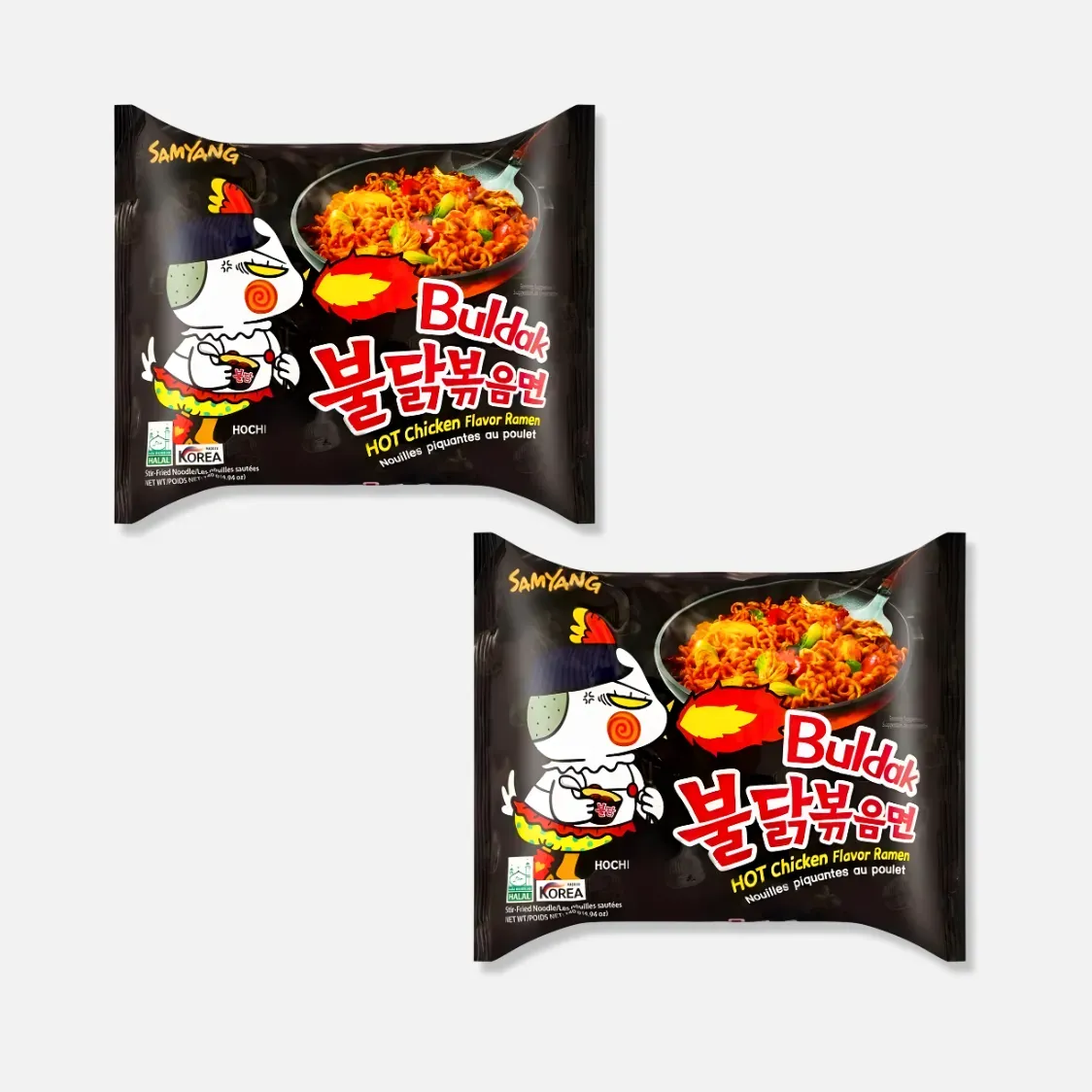
Use the name printed on the packaging, then the size and quantity. “Samyang Buldak Hot Chicken Flavour Ramen 140g, single packet” tells the customer everything; “Spicy Korean noodles” tells them nothing and competes with every other spicy noodle on the marketplace.
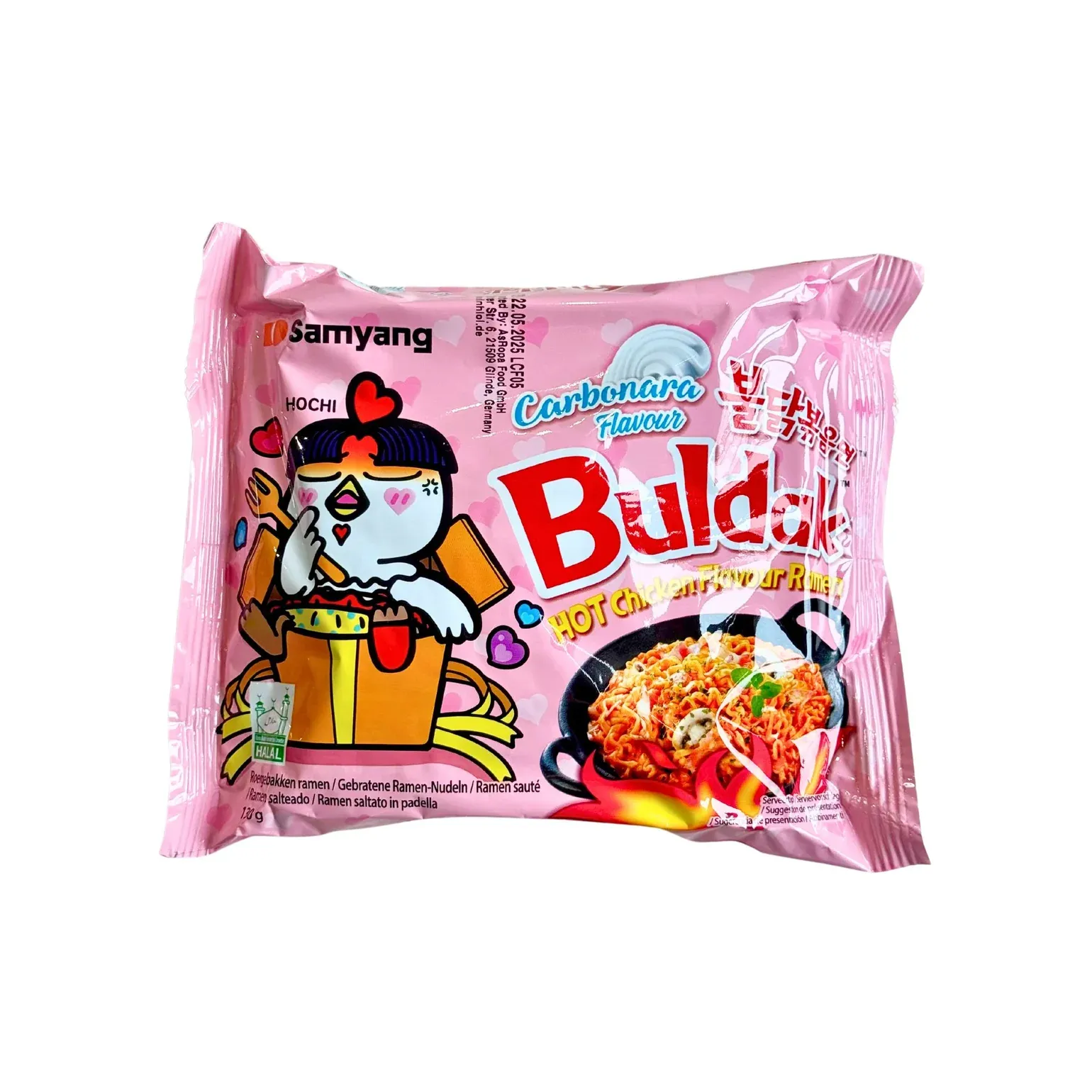
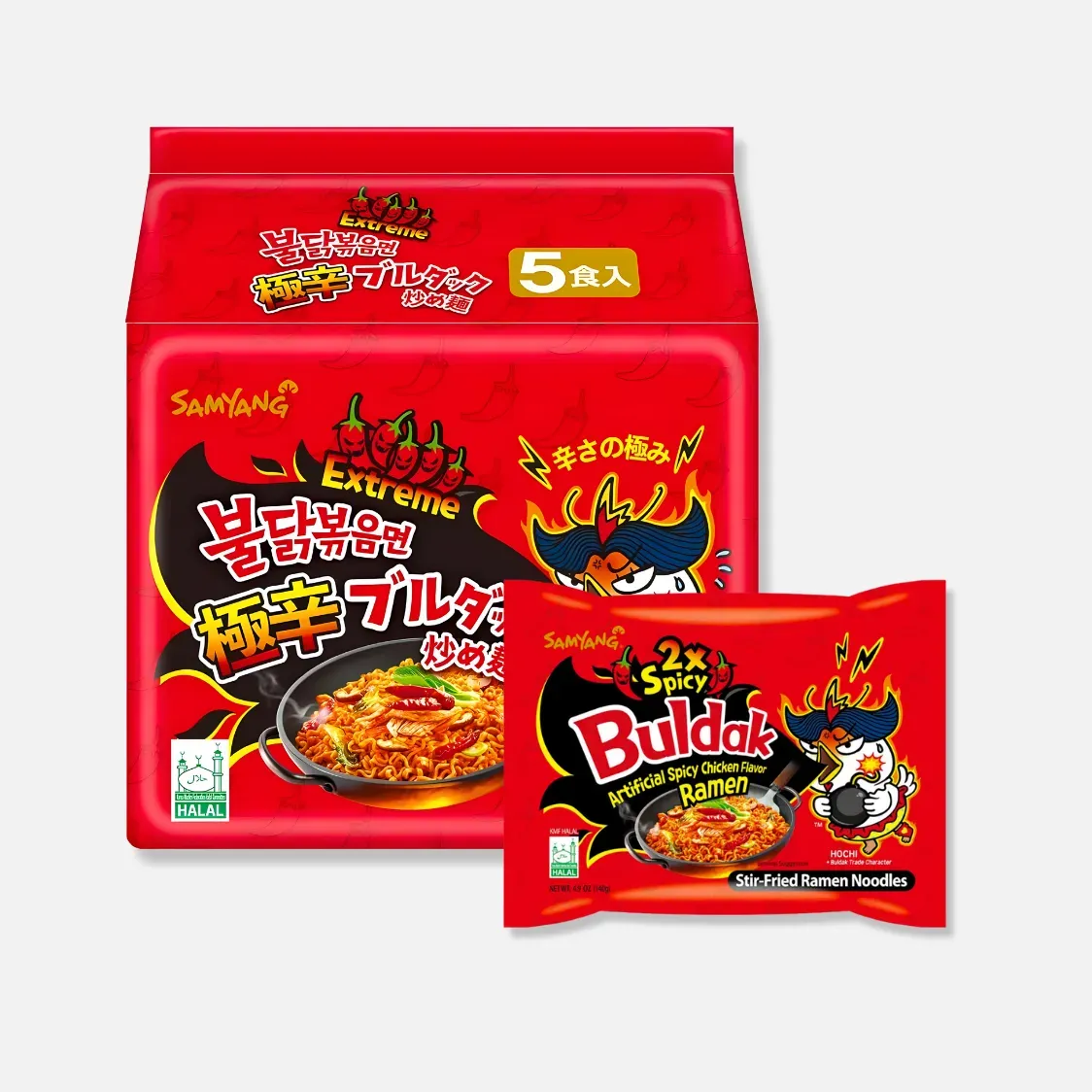
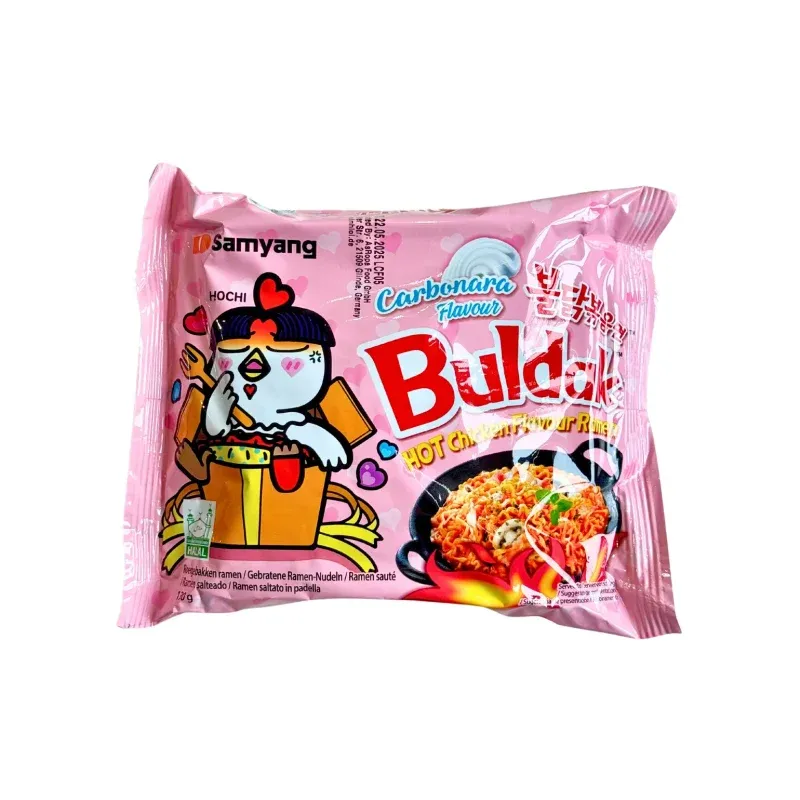
Keep flavour names consistent with the manufacturer’s own naming. The Buldak range is built on one hot chicken base with variations — 2X Spicy raises the heat, Carbonara rounds it off with a creamy, dairy-style sauce — and customers who already know the range search for those names. Our Samyang Buldak flavours guide lists the range as the manufacturer names it.
State the unit the customer actually receives
Most listing errors in this category are quantity errors. The same flavour is sold as a single packet, as a multipack, and by the carton, and the photographs often look identical. Say in the title and again in the first line of the description how many units are in the order and what each one weighs.
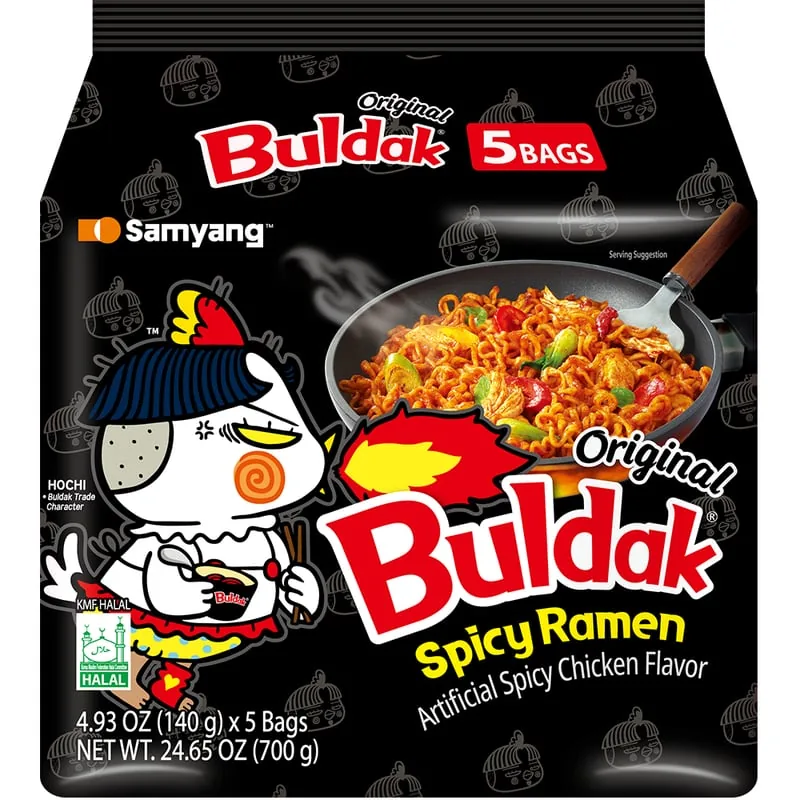
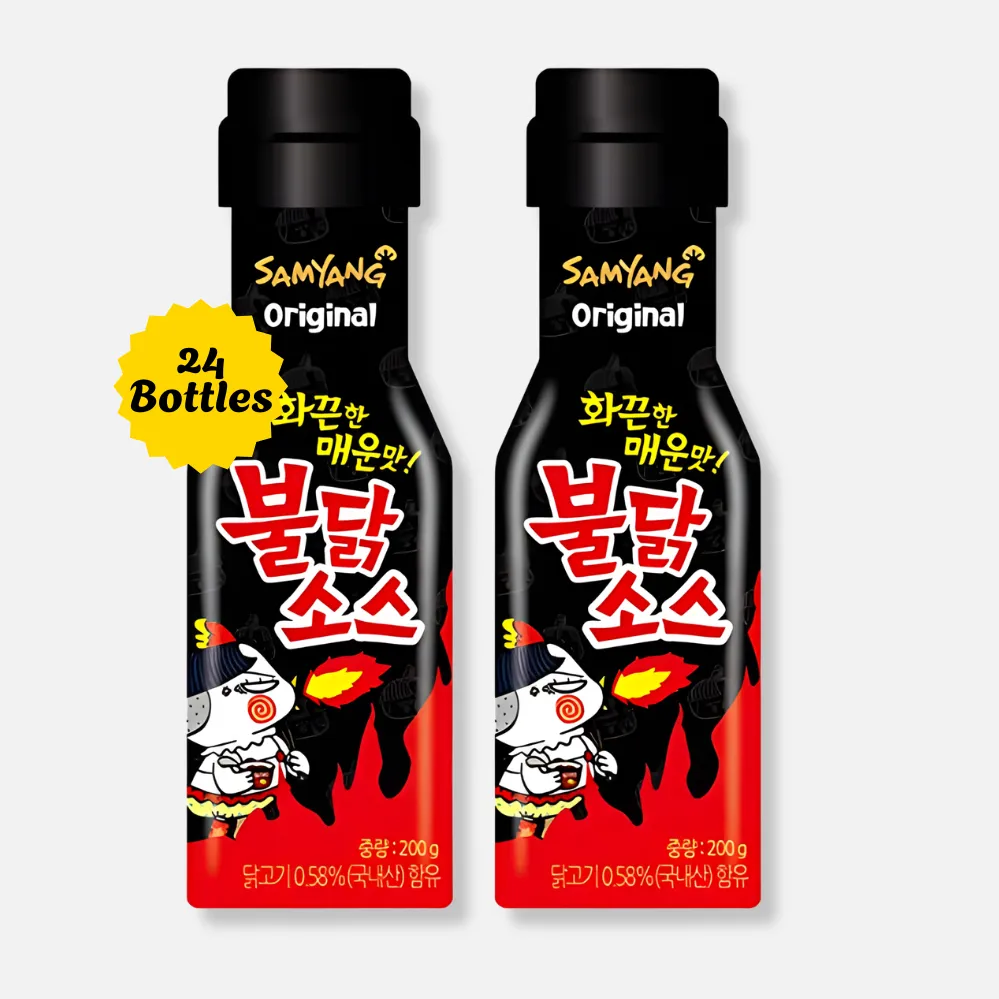
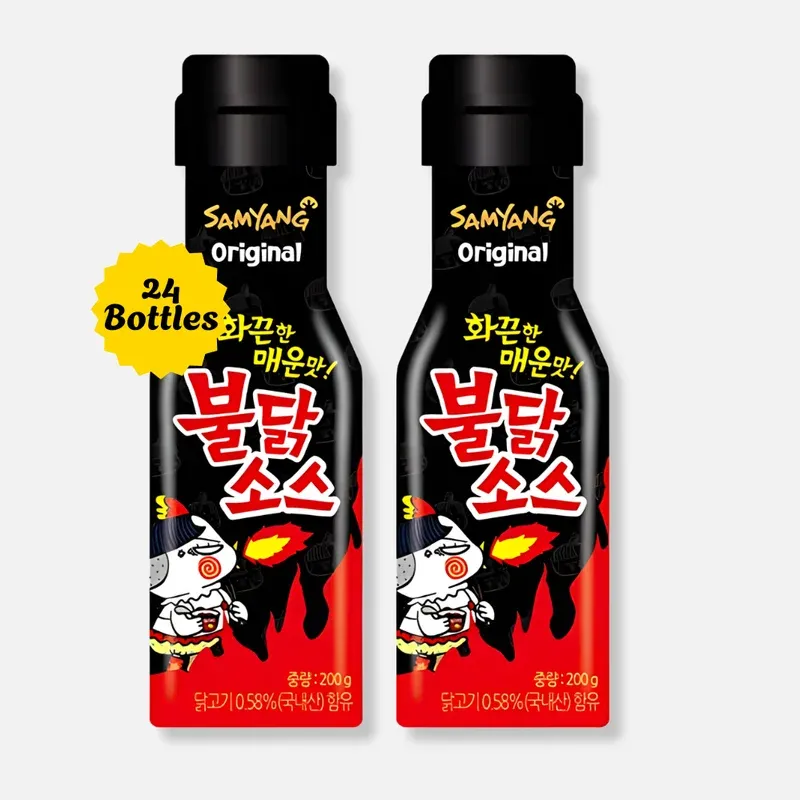
Pack weights differ across the range, so never copy one listing into the next and change only the flavour. The Original packet is 140 g; the Carbonara packet is 130 g; the Hot Sauce Original bottle is 200 g. Every product page in our catalogue states the pack size and units per carton.
Take the barcode and label details from the pack in your hand
Marketplaces generally match listings by barcode, and a wrong barcode attaches your stock to someone else’s product page. Read the barcode, ingredients and allergen statement from the physical packs you received, and check them again when a new delivery arrives — packaging is revised, and export packs for different markets carry different label text.
Put the mandatory food information online, before checkout
In the EU, Regulation (EU) No 1169/2011 requires the mandatory food information — name, ingredients, allergens, net quantity, storage conditions, the food business operator’s name and address, and so on — to be available to the customer before the purchase is concluded when food is sold at a distance (Article 14). The UK retains the same rule. The best-before date is the exception: it only has to be on the pack at delivery.
In practice that means the ingredients and allergen list belong on the product page in the customer’s language, not only on the back of the packet. Korean-language packs are typically relabelled or stickered for import; transcribe from the label your market requires. Customs documents and labelling covers that side of import.
Describe heat honestly
Customers buy Buldak for the heat and return it for the same reason. Describe relative heat using the manufacturer’s own structure — original, then 2X Spicy, then 3X Spicy — and point cautious buyers to the milder dairy-rounded flavours such as Carbonara. Do not publish Scoville figures unless they come from the manufacturer in writing: a number invented for a listing is a claim your business then owns.
Use real packaging photographs
The photograph is the listing for most customers, and in this category it is also the authenticity check. Buyers of a well-known brand look for the packaging they recognise, and a generic bowl of red noodles reads as either a different product or a counterfeit.
Use photographs of the actual product. Packshots from the manufacturer, its official distributor or your supplier — used with permission — or photographs of your own stock. Do not use AI-generated packaging, mock-ups, or stock photography of unrelated noodles; on a branded food product these mislead the customer about what they will receive.
Match the photograph to the variant. Each flavour, size and multipack quantity needs its own main image. If you sell singles, the main image should show one packet; if you sell a 5-pack, show five. Where your photograph shows more units than the listing contains, say so on the image or in the caption.
Add your own photographs of what arrives. A clear shot of the back-of-pack label, the import sticker and the outer box answers the questions customers otherwise send by email, and it is evidence if a delivery is disputed.
Keep the files light. A square image of around 1,000–1,500 pixels on a plain background is enough for zoom on every major platform. Export to WebP or a well-compressed JPEG, and write alt text that names the brand, flavour and pack size — it is read by screen readers and by search engines.
Manage inventory in sellable units
Wholesale stock arrives in cartons; online customers buy in units. Your stock system has to translate between the two, or it will show stock you cannot actually send.
Count units, convert from cartons
Record every delivery as units at the point of receipt: a packet ramen carton holds 40 packs, a cup carton 30 cups, a bowl carton 16 bowls, and a sauce carton 24 bottles. If you also sell multipacks or bundles, deduct the component units when an order is placed, not when the bundle is assembled.
Hold back a buffer on the fast lines
The best-selling flavours sell out first, and an oversold order on a marketplace costs more than the sale was worth. Keep a small number of units on your strongest lines that are never shown as available, and if you sell on more than one channel, update stock from one place.
Pick on date, not on arrival
Instant noodles are forgiving but not indefinite. The range carries a 10–12 month shelf life from production, and a later delivery can carry an earlier date than stock already on your shelves. Record the best-before date on each delivery when it is received, ship the earliest-dated stock first, and set a minimum remaining shelf life below which a unit is no longer sent to customers. Shelf life and storage of instant noodles covers storage conditions and date rotation in full.
Reorder before you run out
Stock you sell in days can take weeks to replace, and an import order is planned rather than placed on impulse. Track rate of sale by line, and set a reorder point that covers your supplier’s lead time and the freight in between. Because our 200-carton minimum applies to the order as a whole, a replenishment order can be split across packet, cup, bowl and sauce lines to match what actually sold — see minimum order quantities.
Pack orders so they arrive as photographed
The customer’s first physical contact with your shop is the parcel. Crushed noodles still taste the same, but they look like neglect, and broken cups or leaking sauce turn into refunds.
Packets
Packet ramen crushes rather than breaks, and most damage comes from movement inside the box. Use a carton sized to the order, fill every void, and avoid sending packets loose in a padded bag where they bear the weight of everything stacked on them in transit.
Cups and bowls
Cups and bowls show damage immediately — dented walls and lifted lids. Pack them upright, in a rigid box, with void fill above as well as around them. Our packet, cup or bowl guide explains the format differences if you are deciding which to stock for online sale.
Sauce bottles
Sauce is the heaviest item in a mixed order and the one that can damage everything else. Seal each bottle in its own bag, wrap it, and pack it at the base of the box, away from the noodles.
Heat and humidity
Store and pack away from heat and damp, and be cautious with parcels that will sit in hot vans or depots for long periods. The same conditions that shorten shelf life in a warehouse affect a parcel in transit.
Customer service that protects your rating
Most problems in this category are predictable, so answer them before they become complaints:
- “How hot is it?” — Link from each listing to a short heat guide that orders the range from mild to hot.
- “Is this genuine?” — Real photographs of your own stock, including the label and import sticker, answer this better than any claim.
- “It arrived damaged.” — Ask for a photograph, replace quickly, and change the packing method if the same damage recurs.
- “What’s the best-before date?” — Your system already records it if you pick on date, so you can answer straight away.
From listing to replenishment
Selling Samyang Buldak online comes down to a short list of disciplines: name and photograph exactly what you ship, publish the food information before checkout, count stock in the units customers buy, ship the earliest dates first, and pack every order so it arrives looking as it did in the photograph.
When you are ready to stock or restock, every product in our catalogue — across packet ramen, cup noodles, bowls and sauce bottles — lists its pack size, units per carton and carton configuration, so you can plan quantities before you contact us. Request a wholesale quotation with your shortlist and destination, or message our sales team on WhatsApp with any questions about the range. Our guide to how ordering works explains each step from quotation to delivery.
Frequently asked questions
- What information should a Samyang Buldak product listing include?
- At minimum: the exact product name as printed on the pack, the net weight per unit, how many units the customer receives, the pack format (packet, cup, bowl or bottle), the barcode printed on the pack, and the ingredients and allergen information in the language of the market you sell into. Take every one of those from the physical stock in your warehouse, not from another seller's listing.
- Can I use manufacturer packaging images on my online shop?
- Only where you have permission — from the manufacturer, its official distributor, or the supplier who provided the images for resale use. Whatever the source, the image must show the exact product and pack size you are shipping. A photograph of a 5-pack on a listing for a single packet, or of the Korean domestic pack when you ship the export version, invites returns and complaints.
- How should instant noodles be packed for parcel delivery?
- Packet noodles crush rather than break, so the aim is to stop movement inside the box: a snug carton, void fill on every side, and heavy items such as sauce bottles at the base. Glass or plastic sauce bottles should be sealed in a bag and wrapped individually. Cups and bowls need the most protection because their lids and walls show damage immediately.
- How do I avoid overselling Buldak flavours online?
- Count stock in sellable units rather than cartons, keep a small buffer that is never shown as available on fast-selling lines, and update stock from one place when you sell on more than one channel. The most popular lines run out first, which is exactly where an oversold order does the most damage to your seller rating.
- How should an online shop manage best-before dates?
- Pick on date, not on arrival: ship the earliest-dated stock first, and set a minimum remaining shelf life below which a unit is no longer sent to customers. The Buldak range carries a 10–12 month shelf life from production, and what reaches your warehouse is what remains after transit and clearance, so record the date on each delivery when you receive it.